Article summary
How did France's 2004 headscarf ban affect the integration of Muslim women?


How did France's 2004 headscarf ban affect the integration of Muslim women?

Electoral competition sharpens divisions among voters in Israel.
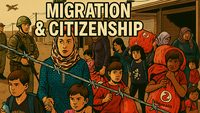
Using the 2016 American National Election Study, the authors examine how Americans’ perceptions of immigrant threat and the strength of their American identity jointly relate to vote choice in the 2016 presidential election. Grounded in social identity theory, the paper tests whether perceptions of immigrant threat are more likely to translate into support for Donald Trump among those with stronger American identity, and conversely whether American identity’s effects on vote choice are activated by threat perceptions. With survey data from ANES, the authors report that immigrant-threat perceptions and American identity magnify each other’s effects: threat perceptions have larger associations with support for Trump among respondents with stronger American identity, and American identity has stronger associations with vote choice when respondents perceive greater immigrant threat.

Affective polarization has been explained by two main theories: social identity theory suggests party-based feelings increase with political relevance, while others argue extreme actors drive polarization. This survey experiment assigns randomly either a candidate's ideology or their party to test which factor creates stronger negative reactions from respondents. Respondents showed significantly greater affective polarization toward the out-party's ideology than its assigned party label alone.
New findings reveal that repression does not uniformly increase polarization; its effects depend on the type of repression experienced.
Connecting democratic politics to social cooperation debates, this research explores partisan trust discrimination.

Do citizens favor the use of force less often against countries that share their ideological orientation? This article tests a domestic–international nexus beyond the democratic peace: the authors propose a “left‑wing peace” and a “right‑wing peace,” where respondents are less willing to use force against foreign states that match their own left‑ or right‑wing ideology. The study argues this pattern arises from out‑group bias and that rising polarization amplifies the effect.