Article summary
Examines whether increasing women's representation changes how communities talk about and decide climate-related forest policies in Malawi.

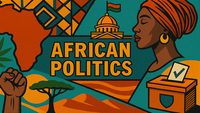
Examines whether increasing women's representation changes how communities talk about and decide climate-related forest policies in Malawi.

This study asks whether citizens in a target country perceive audience costs in a threatening challenger state and whether the challenger’s regime type (democracy vs. dictatorship) affects that perception. Using a pre-registered survey experiment conducted in the United States, the authors test whether audiences abroad recognize that a leader who would suffer domestic backlash for backing down can send a more credible threat.
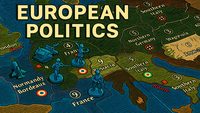
Do radical right parties need to distance themselves from past right-wing authoritarian regimes to win votes? This study probes the reputational cost, if any, of association with anti-democratic regimes, and the paper confronts challenges that make that cost hard to observe.

Recent elections across Europe and North America fueled populist anti-immigrant sentiment, leading many to expect Brexit would reinforce xenophobia. However, this study conducted an experiment around the referendum finds that among both Leave and Remain supporters, anti-immigrant attitudes softened post-Brexit.

Disaster responses are political, but can citizens make useful decisions that help other people? This study uses an experimental economic game that simulates disaster choices to test whether people are willing and able to prevent disasters for others when options are complex and vary in risk. The authors report that players paid to help, invested in learning, and could identify which options were most useful across conditions, suggesting that people sometimes make costly, useful decisions on behalf of others.
This study asks whether commonly observed gaps—women scoring lower on political knowledge, expressing less interest, and being less likely to give valid answers—are driven by how surveys define "politics." The author shifts the focus from questions about political institutions to a broader set of issues that can be considered political, and uses an experimental design to test whether measurement choices systematically disadvantage women. The contribution is a qualified challenge to the conventional interpretation of political knowledge and interest: the gender gaps appear to depend on the traditional, institution-centered content of survey items rather than on an overall deficit in women’s political information or engagement.

Survey experiments have become increasingly popular in political science research.
In limited statehood areas, do positive police-citizen relationships foster greater acceptance of state authority? The author argues that relationship building provides crucial information and facilitates social bonds. However, the paper shows shared demographic characteristics between officers and citizens don't enhance this effect.

Fewer than half of reviewer invitations are accepted at many political science journals, increasing editors' workloads and lengthening the review process for authors. This study examines which invitations succeed and whether simple changes to invitation letters can improve acceptance at the Canadian Journal of Political Science.
This study investigates the impact of anti-corruption campaign messages on public perceptions using experimental methods.
New research uncovers a surprising pattern in measuring support for violent extremism: over time, responses tend to shift toward alignment with local political power due to the Grapevine Effect. This phenomenon occurs as participants hear about the study and alter their answers out of fear of retribution.
This study investigates rational decision-making across different regions.
Nyhan and Reifler (2010, 2015) documented a "backfire effect"—a phenomenon in which attempts to correct factual misperceptions actually increase the prevalence of the false belief. Their findings have become widely cited both inside and outside political science.
This study explores citizens' preferences for decision-making procedures on public goods.
Muslim Americans face frequent public and governmental discrimination, yet few interventions have been rigorously tested to reduce that prejudice. This study tests whether providing corrective information about common misperceptions—specifically that Muslim Americans are unusually foreign, threatening, or disloyal—can improve attitudes toward the group.
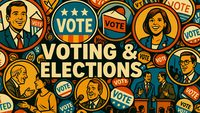
A new study explores how voters respond to ballot propositions requiring tax dollars. Using original experimental data, it examines the effect of language specificity on voter support.

Does judicial review by unelected judges damage public support for their decisions? This question has often been answered yes.
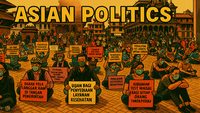
New field experiment investigates how religious authority and sacred texts influence charitable giving among Afghan day laborers.
Does social network data gathered online accurately reflect real-world offline relationships?

This study introduces experimental research design into policy diffusion studies, focusing on political ideology's impact.