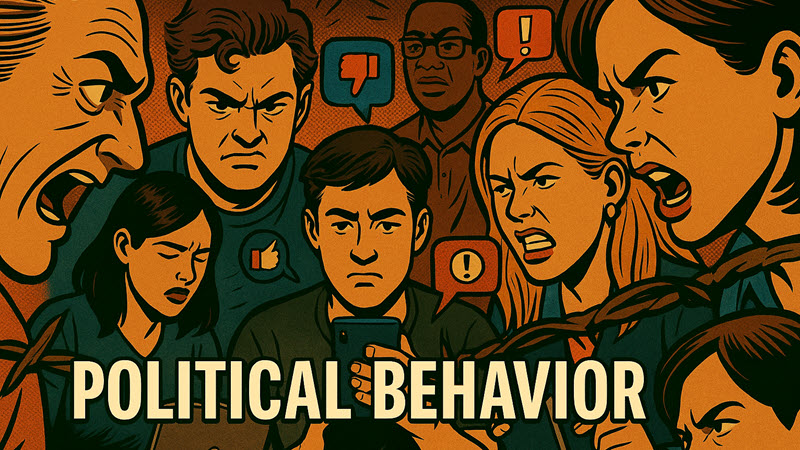
The idea that Americans routinely shun or “cancel” disagreeable speakers is widespread. This study measures how common such sanctioning really is, what motivates it, and how people perceive others’ willingness to cancel.
🧾 National Survey With an Embedded Conjoint Experiment
A nationally representative survey of U.S. adults included an embedded conjoint experiment that randomized features of hypothetical speakers and statements to observe which traits trigger sanctioning judgments.
🔎 What People Believe — and How That Compares
- Americans substantially overestimate how likely other people are to “cancel” others for offensive or disagreeable speech.
- This overestimation is especially pronounced when judging members of the political out-party.
📌 What Actually Motivates Canceling
- Perceptions about others’ motivations are accurate: sanctioning is driven more by the content of disagreeable or offensive statements than by mere dislike of the speaker.
- Democrats and Republicans show similar motivations for wanting to cancel when presented with the same offensive content.
- Despite similar motivations, real-world canceling behavior may be observed more often among Democrats, suggesting a gap between private motivation and visible action.
⚖️ Why This Matters
- Misperceiving how common canceling is—especially among out-partisans—can heighten fears of social sanction and spur self-censorship.
- Accurate recognition that offensive speech, not personal dislike, drives sanctions clarifies the normative stakes in contemporary free-speech debates.
- Findings point to a dynamic where canceling could curb harmful speech but also deepen partisan animus and shape public perceptions of social punishment.