FIND DATA: By Journal | Sites   ANALYZE DATA: Help with R | SPSS | Stata | Excel   WHAT'S NEW? US Politics | IR | Law & Courts🎵
   FIND DATA: By Journal | Sites   WHAT'S NEW? US Politics | IR | Law & Courts🎵
WHAT'S NEW? US Politics | IR | Law & Courts🎵
If this link is broken, please report as broken. You can also submit updates (will be reviewed).

Social Media Campaign Fails to Transform Attitudes, Only Attracts Like-Minded Activists

Social Media ExperimentsCivic CampaignsBulgariaFacebook PlatformTransformative HypothesisPolitical BehaviorPSR&M2 R files3 datasetsDataverse
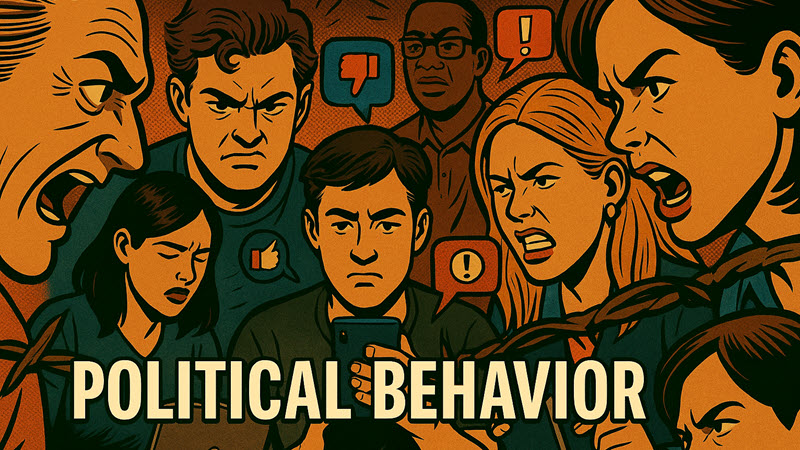
Political Behavior subfield banner

This study investigates whether social media campaigns can recruit new activists or transform public attitudes. Using a randomized field experiment in Bulgaria via Facebook and email newsletter,

Data & Methods

* Collaborated with an environmental campaign.

* Compared outcomes across different intervention groups (Facebook vs. Email).

Key Findings

* Campaigns effectively recruit individuals already predisposed to activism or highly educated.

* Characteristics and prior engagement predict participation more than the campaign itself alters opinions or knowledge.

* No substantial evidence suggests campaigns significantly change broader public perspectives on civic society's effectiveness, environmental issues, or self-reported behavior.

The study concludes that common social media campaigns primarily serve an organizational function by selecting specific individuals rather than achieving widespread transformative effects.
Article card for article: Does Social Media Promote Civic Activism? A Field Experiment with a Civic Campaign
Does Social Media Promote Civic Activism? A Field Experiment with a Civic Campaign was authored by Florian Foos, Lyubomir Kostadinov, Nikolay Marinov and Frank Schimmelfennig. It was published by Cambridge in PSR&M in 2021.
Find on Google Scholar
Find on JSTOR
Find on CUP
Political Science Research & Methods
Edit article record marker