What the Article Asks: Jordan Becker and Edmund Malesky (ISQ) investigate whether NATO allies' strategic cultures shape how they allocate defense resources—specifically, whether countries that articulate an "Atlanticist" outlook devote a larger share of their defense budgets to Alliance operations than those with a more "Europeanist" outlook.
Why This Question Matters: Debates about transatlantic burden-sharing typically focus on aggregate defense spending or on which countries contribute boots or money. Becker and Malesky shift attention inside defense budgets to ask which types of expenditures (operations, personnel, infrastructure, equipment) are prioritized. That matters because operational spending directly supports the Alliance’s collective missions and reveals how states translate strategic words into budgetary choices.
How the Study Was Done: The authors content-coded 89 national security strategy documents from 24 NATO allies and matched those qualitative indicators to budgetary allocations during NATO’s "out of area" peak (2000–2012). They measure the degree to which documents used Atlanticist versus Europeanist language and then test whether that variation predicts the share of defense resources allocated to military operations, versus personnel, infrastructure, or equipment.
Key Findings:
What This Means For Policy and Scholarship: The study provides empirical evidence that rhetoric about transatlantic priorities is not merely symbolic: strategic culture predicts concrete budgetary trade-offs that affect NATO’s operational capacity. For scholars, the findings invite greater attention to how cultural and discursive variables shape the composition—not just the size—of defense spending.
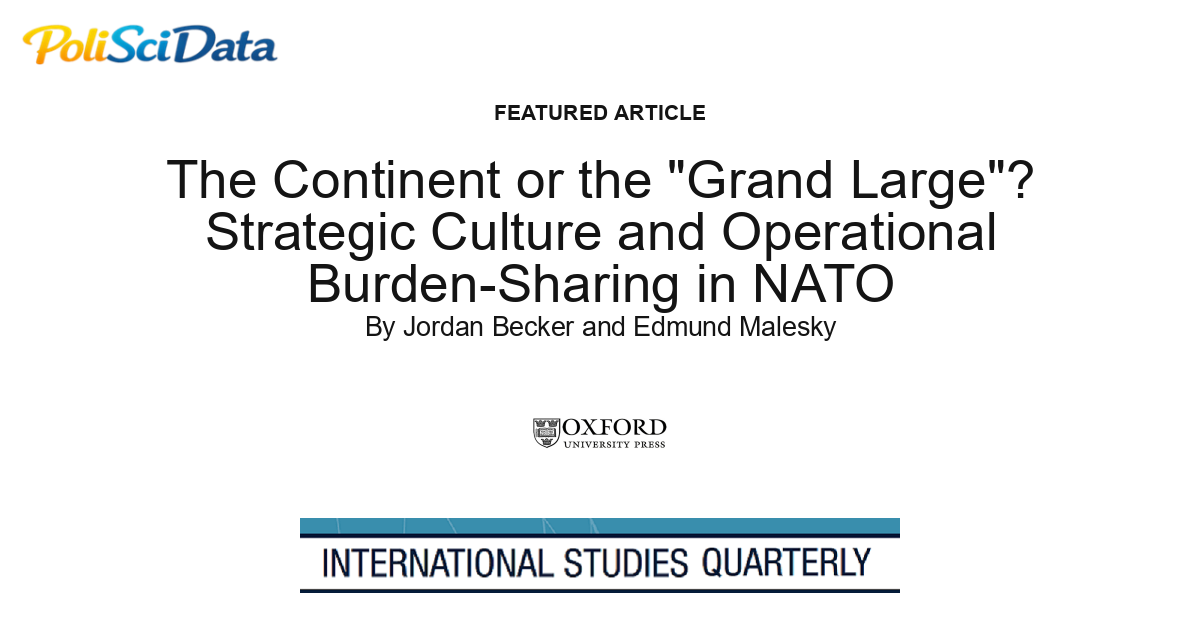
| The Continent or the "Grand Large"? Strategic Culture and Operational Burden-Sharing in NATO was authored by Jordan Becker and Edmund Malesky. It was published by Oxford in ISQ in 2017. |