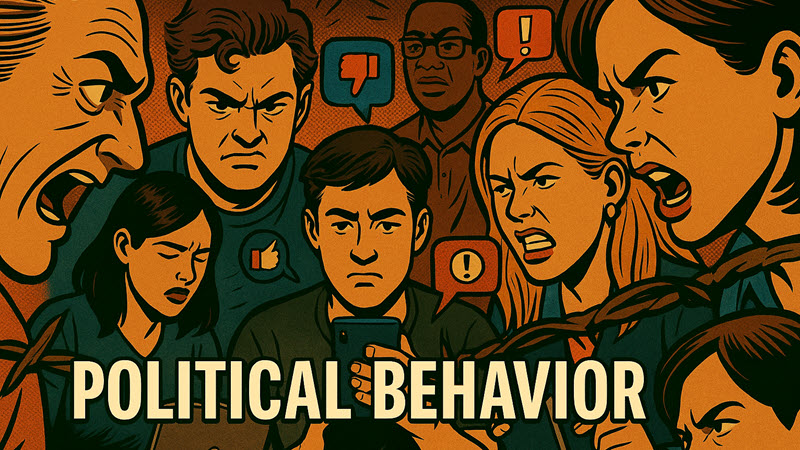
New survey experiments conducted just before and after the US election revealed partisan differences in how conspiracy theories affect views. The study tested whether reading conspiratorial accounts about election interference would harm trust in democratic institutions.
Researchers found that exposure to claims of election tampering increased negative feelings like anxiety or anger, which then reduced confidence in democracy's core principles among participants.
Contrary predictions were observed: Democrats exposed to Russian interference narratives showed diminished trust, while Republicans reading about Democratic Party involvement actually expressed stronger support for democratic norms. The findings highlight that conspiracy claims erode institutional confidence differently based on partisan beliefs.
| Conspiracy Theories, Election Rigging, and Support for Democratic Norms was authored by Bethany Albertson and Kim Guiler. It was published by Sage in R&P in 2020. |