
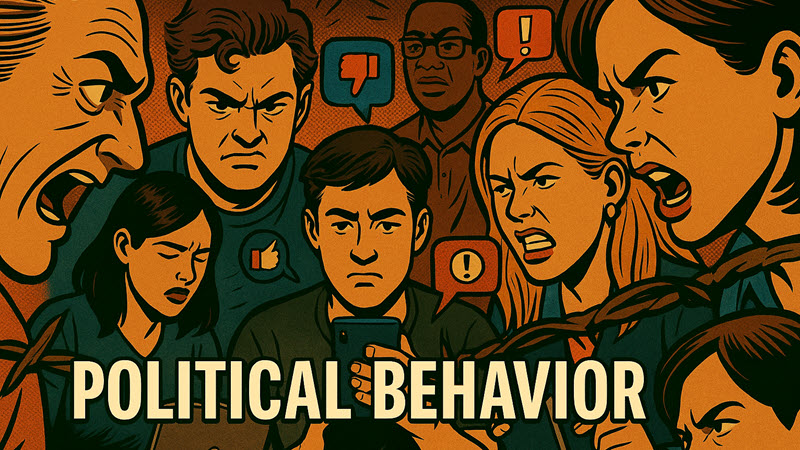
Does partisanship influence whether citizens adopt public policies? Using longitudinal data on Affordable Care Act enrollment, we find Republicans significantly less likely to enroll than Democrats, controlling for other factors. This partisan gap is then addressed through a large-scale field experiment: presenting ACA options with reduced emphasis on government involvement and increased focus on market alternatives narrows the difference in uptake rates between partisans.
Findings:**
Methodology:**
This research shows that policy uptake is not merely an economic or informational choice but involves partisan politics. By altering how government's role was presented, we influenced behavior across party lines.
| Policy Uptake as Political Behavior: Evidence from the Affordable Care Act was authored by Amy E. Lerman, Meredith Sadin and Samuel Trachtman. It was published by Cambridge in APSR in 2017. |


