FIND DATA: By Journal | Sites   ANALYZE DATA: Help with R | SPSS | Stata | Excel   WHAT'S NEW? US Politics | IR | Law & Courts🎵
   FIND DATA: By Journal | Sites   WHAT'S NEW? US Politics | IR | Law & Courts🎵
WHAT'S NEW? US Politics | IR | Law & Courts🎵
If this link is broken, please report as broken. You can also submit updates (will be reviewed).

Why Citizens' Social Media Spillo Could Worsen Political Distrust

Interpersonal Transmission BiasSocial Media DisseminationPolitical DistrustPolitical BehaviorAPSR6 Stata files6 datasetsDataverse
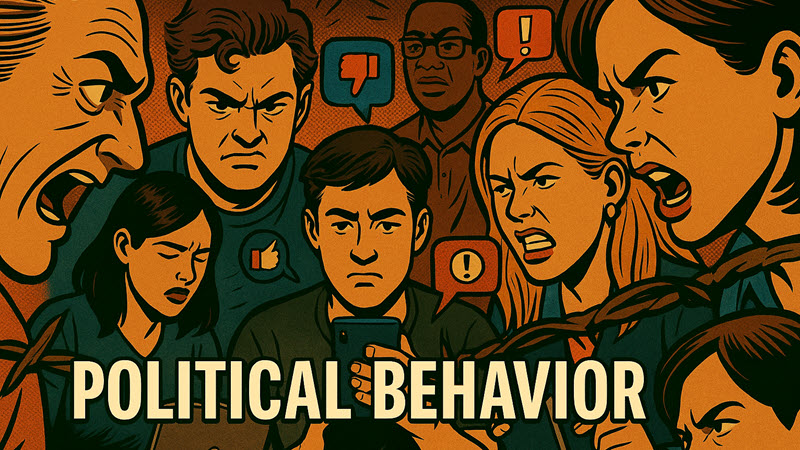
Political Behavior subfield banner

Widespread distrust in politicians is often blamed on elites. But this article turns to citizens, arguing they actively worsen the problem.

The core mechanism: a psychological bias where people prefer sharing information about others' selfish actions online. We call it "interpersonal transmission bias" — spreading stories that harm social cohesion but serve individual interests.

Data & Methods:

* Experimental studies designed to observe real-world communication chains.

Key Findings:

* Citizens disproportionally spread negative political information through interpersonal channels.

* This selective sharing directly contributes to feelings of distrust toward politicians and policy disapproval among recipients.

Why It Matters:

* Offers a crucial mass-level perspective on fostering political polarization.

* Provides insights for designing campaigns against misinformation in politics.

Article card for article: Citizens as Complicits: Distrust in Politicians and Biased Social Dissemination of Political Information
Citizens as Complicits: Distrust in Politicians and Biased Social Dissemination of Political Information was authored by Troels Bøggild, Lene Aarøe and Michael Bang Petersen. It was published by Cambridge in APSR in 2021.
Find on Google Scholar
Find on JSTOR
Find on CUP
American Political Science Review
Edit article record marker