
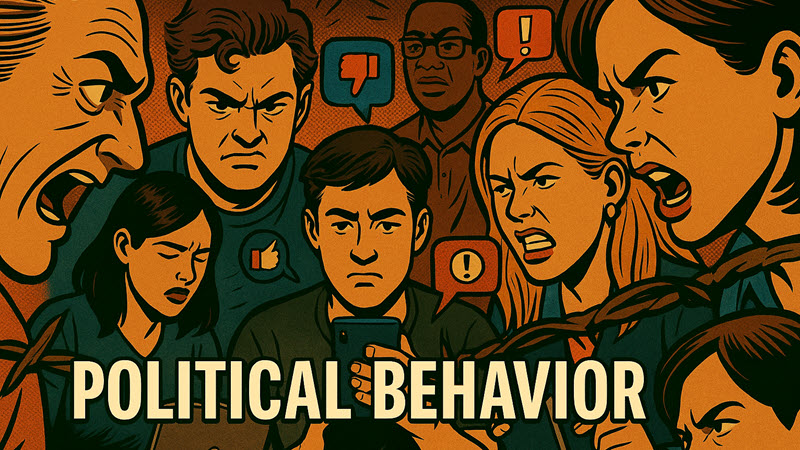
Why Politicians Avoid Apologies
Gabor Simonovits investigates a striking pattern in contemporary politics: despite frequent revelations of sexual misconduct, public apologies from implicated politicians are uncommon. The paper asks whether electoral incentives help explain this silence by testing how voters react to two common post-scandal communication strategies—denials and apologies—across scandals that differ in seriousness and the presence of evidence.
Experimental Design: Survey Experiments With 10,000+ Respondents
Key Findings
Implications for Political Communication
These experimental results suggest a clear electoral logic: apologies are rarely a politically viable strategy in the wake of sex scandals. For scholars of political behavior and communication, the findings indicate that voters respond to admission of wrongdoing with punishment rather than reward, and that the presence of evidence does not change this pattern. The study helps explain why politicians often opt to deny or otherwise deflect rather than apologize after scandalous revelations.
Where This Fits
This note contributes to literature on political behavior, reputation management, and political communication by providing experimental evidence on how different messaging choices shape voter sanctions following ethical or sexual misconduct allegations.
| Why Politicians Won't Apologize: Communication Effects in the Aftermath of Sex Scandals was authored by Bence Hamrak, Gabor Simonovits, Alex Rusnak and Ferenc Szucs. It was published by Cambridge in BJPS in 2024. |


