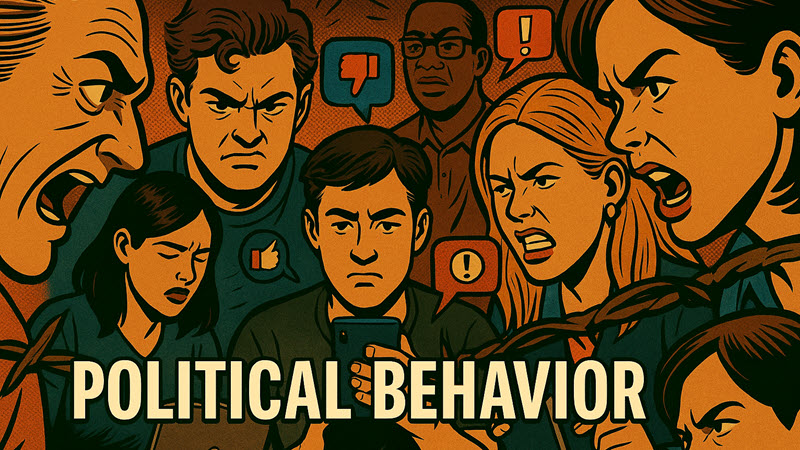
Why Voters Choose Referendums?
Bjarn Eck and Emilien Paulis ask whether electoral winners and losers differ in their support for referendums and how affective polarization shapes those differences. The question matters because referendums are a central form of direct democracy: they can be a corrective for dissatisfied voters but also a check on governing parties’ authority.
What the Authors Measure
The study compares attitudes toward referendums among supporters of governing parties (winners) and opposition parties (losers). It also examines affective polarization—partisans' negative feelings toward supporters of other parties—as a potential amplifier of any winner–loser gap.
Cross-National Survey Evidence
Main Findings
What This Implies for Democratic Politics
These results challenge a simple narrative that disgruntled losers alone drive demand for direct democracy. Instead, electoral victory combined with partisan hostility can reduce winners’ openness to referendums, with potential consequences for accountability and checks on governing parties. Eck and Paulis’s findings shift attention toward the democratic implications of victory as well as loss, and suggest that affective polarization can undermine citizens’ shared commitment to institutional checks on power.
| Defending the Status Quo or Seeking Change? Electoral Outcomes, Affective Polarisation, and Support for Referendums was authored by Bjarn Eck and Emilien Paulis. It was published by Cambridge in BJPS in 2025. |