
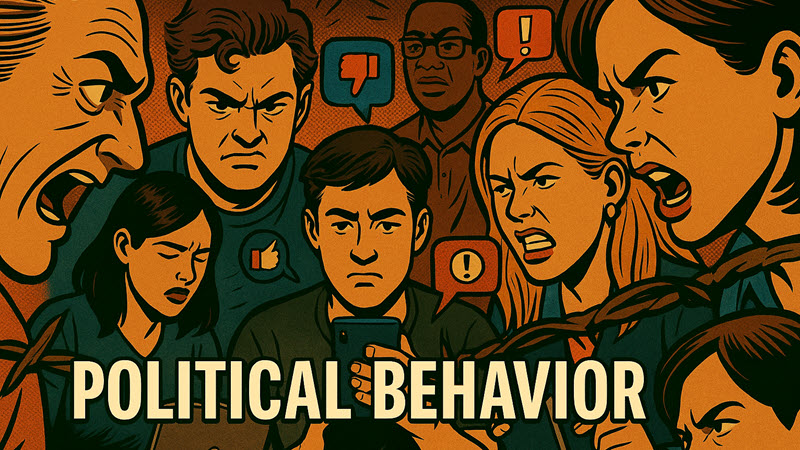
Why Voters Care About Unilateral Power
Jonathan Chu and Scott Williamson investigate how citizens respond when executives bypass legislatures to make policy by decree. The question matters because executives in many systems—from democracies to authoritarian states—use unilateral instruments (orders, decrees) to act quickly, but public reactions could shape the political costs and limits of such actions.
How the Authors Tested It
The authors combine survey experiments in two starkly different contexts—the United States and Egypt—with observational survey data covering dozens of countries. Experimental treatments vary whether a policy is implemented unilaterally by the executive or through legislative processes, and whether the policy is on domestic or foreign affairs.
What the Evidence Shows
Why This Matters
The results show popular commitment to institutional procedure can constrain executive behavior across regime types. Citizens penalize bypassing representative institutions both for domestic and foreign policymaking, though broadly shared policy goals can mitigate those costs. The study highlights an overlooked public check on unilateral power and helps explain when executives may feel politically safe to govern by decree and when they will face public pushback.
Who Did the Work
Jonathan Chu and Scott Williamson present the experimental and cross-national evidence and interpret these findings in the context of literature on executive orders, legislative politics, and democratic norms.
| Respect the Process: The Public Cost of Unilateral Action in Comparative Perspective was authored by Jonathan Chu and Scott Williamson. It was published by Chicago in JOP in 2025. |


