
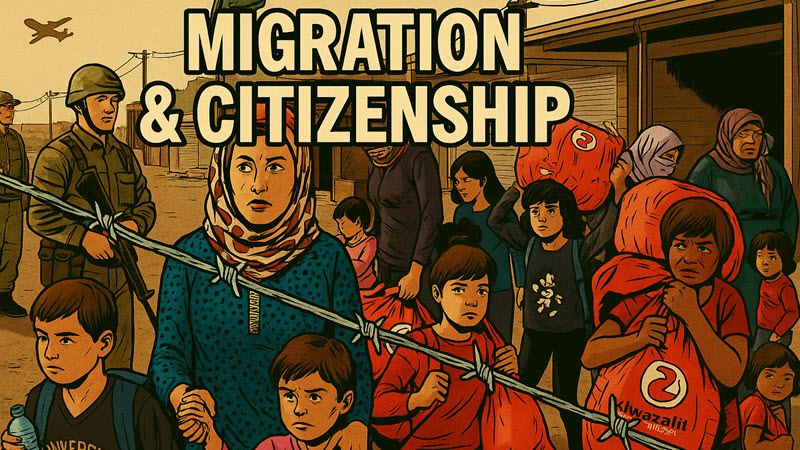
Does exposure to the refugee crisis increase support for extreme-right parties? This study leverages a sudden refugee surge on Aegean islands to provide causal evidence that brief, visible inflows changed electoral outcomes before the September 2015 Greek election.
🧭 Natural experiment on Aegean islands
Some islands close to the Turkish border experienced sudden and drastic arrivals of Syrian refugees, while otherwise similar islands slightly farther away did not. These inflows were massive but transient, with refugees largely passing through in the weeks before the September 2015 election. The geographic variation in exposure functions as a natural experiment.
📊 How exposure and voting were compared
🔍 Key finding
⚖️ Why this matters
Mere exposure to a visible refugee surge, even when temporary, was sufficient to elevate support for an extreme-right party. This result has important implications for theories of antirefugee backlash and for understanding how short-term demographic shocks can reshape local electoral dynamics.
| Waking Up the Golden Dawn: Does Exposure to the Refugee Crisis Increase Support for Extreme-right Parties? was authored by Elias Dinas, Konstantinos Matakos, Dimitrios Xefteris and Dominik Hangartner. It was published by Cambridge in Pol. An. in 2019. |


