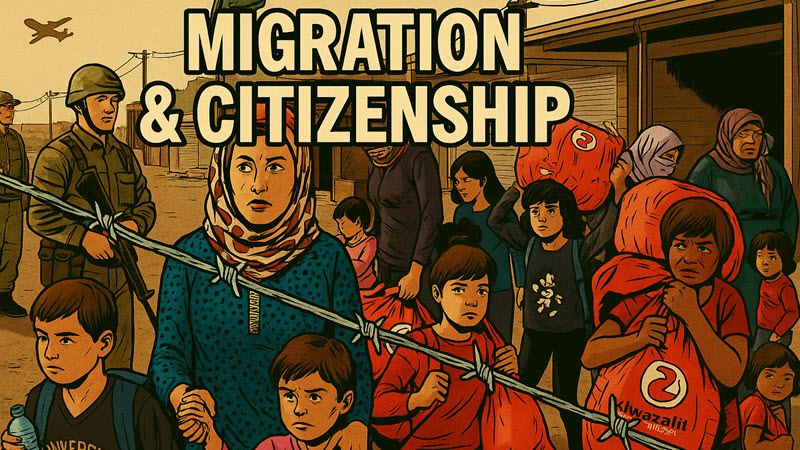
New research reveals physical barriers, intended as tools of immigration enforcement (state repression), actually increase refugee flows rather than reducing migration. Using a global directed dyad-year dataset covering 1990-2016, we find that barriers create a 'sunk costs' problem affecting people's status movement from migrant to refugee. This backfire effect occurs because enforcement discourages return and thus encourages seeking asylum.
Data & Methods:
Key Findings:
Why It Matters:
This study shows how state repression in immigration enforcement can paradoxically fuel refugee applications. The findings challenge the foundational assumption that physical barriers reduce migration and offer insights into unintended consequences of border policies.
| Why Physical Barriers Backfire: How Immigration Enforcement Deters Return and Increases Asylum Applications was authored by Justin Schon and David Leblang. It was published by Sage in CPS in 2021. |