FIND DATA: By Journal | Sites   ANALYZE DATA: Help with R | SPSS | Stata | Excel   WHAT'S NEW? US Politics | IR | Law & Courts🎵
   FIND DATA: By Journal | Sites   WHAT'S NEW? US Politics | IR | Law & Courts🎵
WHAT'S NEW? US Politics | IR | Law & Courts🎵
If this link is broken, please
You can also
(will be reviewed).

Incidental Anger Makes White Ethnocentrism Predict Immigration and Racial Policy Opinions

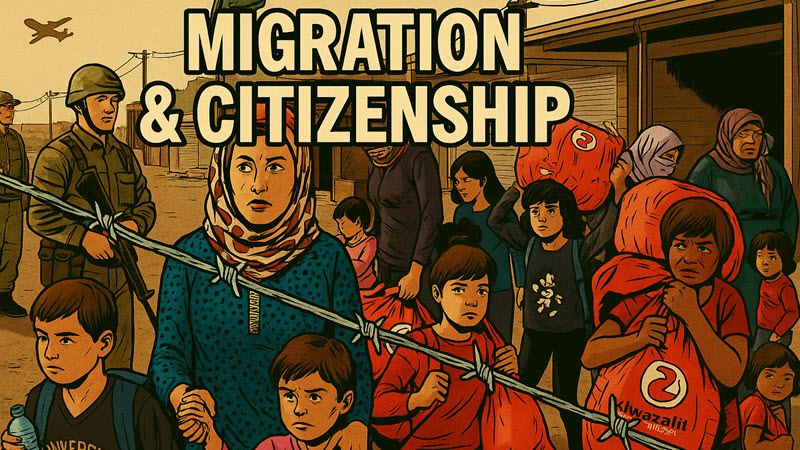
Migration Citizenship subfield banner

Why This Matters: Political conflict is often framed as a response to group threats, but emotions that are unrelated to race or immigration may still shape policy opinions. Antoine Antoine investigates whether incidental anger — anger not triggered by racial or ethnic cues — can activate ethnocentric attitudes among white Americans and change how those attitudes predict views on racial and immigration policies.

What Antoine Tested: The paper asks whether group cues are necessary for ethnocentrism to influence political attitudes. Specifically, it tests whether incidental emotional states (anger, fear, relaxation) can make ethnocentric predispositions among whites more or less predictive of opposition or support for racial and immigration policies.

How the Study Worked:

  • A two-wave national adult experiment randomly induced emotional states (anger, fear, or relaxation) using stimuli unrelated to race or ethnicity. Respondents' levels of ethnocentrism and their opinions on racial and immigration policies were measured.
  • Findings from the experiment were compared to observational evidence from the American National Election Study (ANES) cumulative file to assess whether similar patterns appear in survey data.

Key Findings:

  • Incidental anger increased opposition to racial and immigration policies among white respondents who scored high on ethnocentrism.
  • The same incidental anger produced greater support for those policies among whites who scored low on ethnocentrism (i.e., it made low-ethnocentrism respondents more supportive relative to baseline).
  • Analysis of ANES data shows a comparable nonracial/nonethnic anger effect, corroborating the experimental results.
  • Nonracial/nonethnic fear also had effects: it increased opposition to immigration among whites without strong out-group attitudes (low ethnocentrism).

What This Means for Research and Policy: These results indicate that explicit group threats are not always required for ethnocentric predispositions to shape political views. Incidental emotions can activate latent out-group orientations and alter policy preferences, complicating assumptions about when and how racial attitudes translate into political behavior. The findings suggest scholars and policymakers should account for emotional context — not just informational cues about groups — when interpreting public opinion on race and immigration.
Article card for article: Are Group Cues Necessary?: How Anger Makes Ethnocentrism Among Whites a Stronger Predictor of Racial and Immigration Policy Opinions
Are Group Cues Necessary?: How Anger Makes Ethnocentrism Among Whites a Stronger Predictor of Racial and Immigration Policy Opinions was authored by Antoine Antoine. It was published by Springer in Pol. Behav. in 2016.
Find on Google Scholar
Find on Springer
Political Behavior