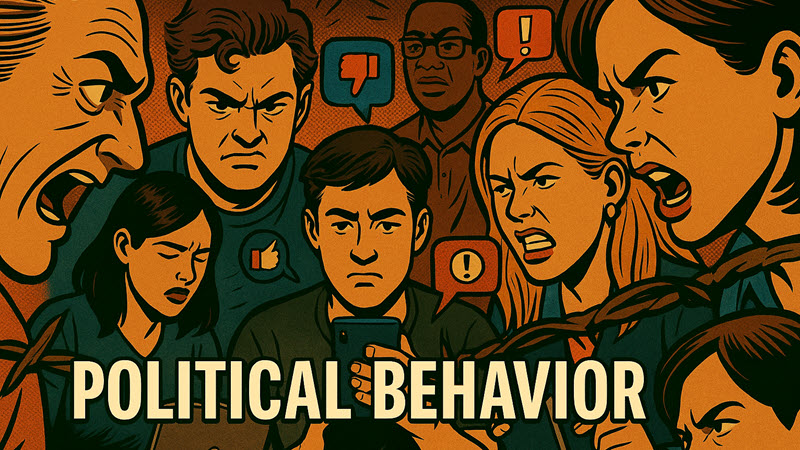
Does partisanship override voters' reactions to sexual harassment allegations? This study investigates how partisan identity and sexist attitudes shape responses to #MeToo scandals.
Subjects were exposed via online experiment to varying severity of allegations against politicians, with manipulated party affiliations. Results reveal nuanced findings: while voters showed partisan bias in forgiveness—leniently evaluating co-partisans but harshly judging opponents—their electoral support decreased similarly for both parties as allegation severity increased.
Critically, these reactions were contingent on sexism levels. Higher sexist attitudes erased the distinction between partisan and non-partisan responses regarding favorability and electoral support following allegations against male politicians in positions of power.
| How Partisanship and Sexism Influence Voters' Reactions to #MeToo Scandals was authored by Mia Costa, Trevor Briggs, Ajaipal Chahal, Jonathan Fried, Rijul Garg, Sophia Kriz, Leo Lei, Anthony Milne and Jennah Slayton. It was published by Sage in R&P in 2020. |