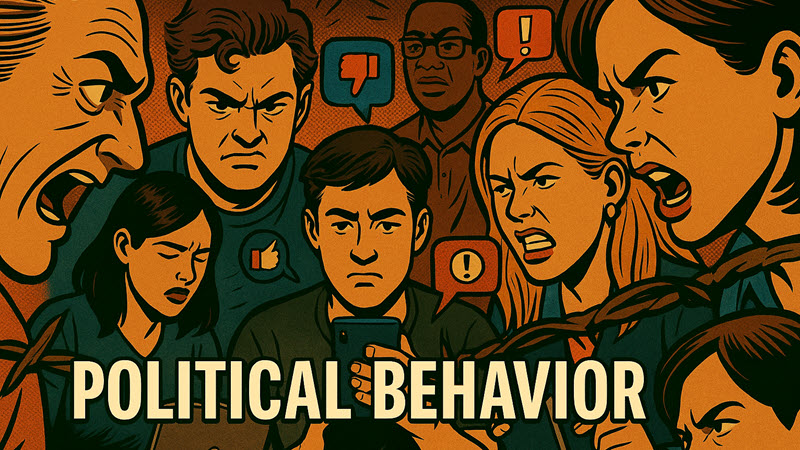
This study demonstrates how partisan media impacts public opinion indirectly.
🔹 Limited Direct Impact: Partisan outlets reach a small audience, but their influence extends further.
🔹 Indirect Persuasion Mechanism: Experimental results show that those exposed persuade others who weren't directly reached.
🔹 Two-Step Communication Flow: The spread depends critically on the discussion partners' partisan alignment. We find varying effects when discussing with like-minded vs mixed audiences.
🔸 Methodology Highlight: Using controlled experiments, we reveal how media content travels through conversation networks.
The findings suggest that earlier research underestimated these outlets' power and challenge assumptions about polarization drivers.
| No Need to Watch: How the Effects of Partisan Media Can Spread via Inter-Personal Discussions was authored by James Druckman, Matthew Levendusky and Audrey McLain. It was published by Wiley in AJPS in 2018. |