
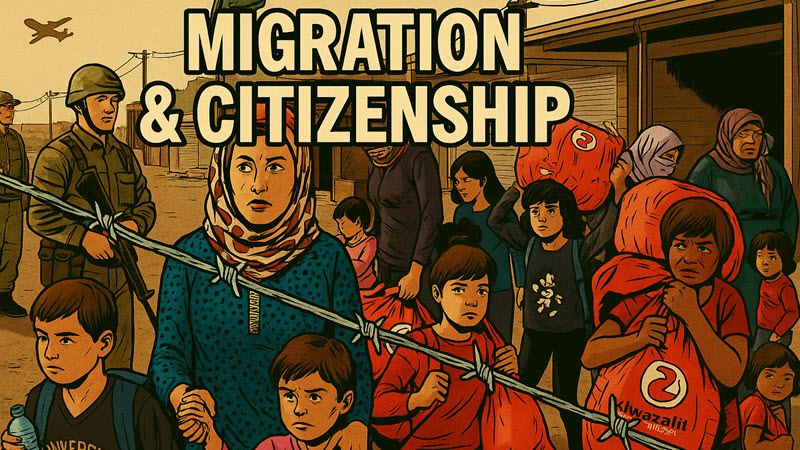
Human trafficking impacts millions globally, particularly women, girls, and marginalized communities. The U.S. State Department's Trafficking in Persons (TIP) Reports are a key data source for tracking global human trafficking but may contain political biases.
This study examines how narratives translate into rankings, questioning whether these rankings reflect objective assessments or political influences. We use supervised machine learning to analyze this process and distinguish between bias from changing standards versus direct political intervention. Our findings reveal that political factors have a stronger influence on the final rankings than evolving data collection standards.
| TIP for Tat: Political Bias in Human Rights Trafficking Reporting was authored by Rachel Harmon, Daniel Arnon and Baekkwan Park. It was published by Cambridge in BJPS in 2022. |


