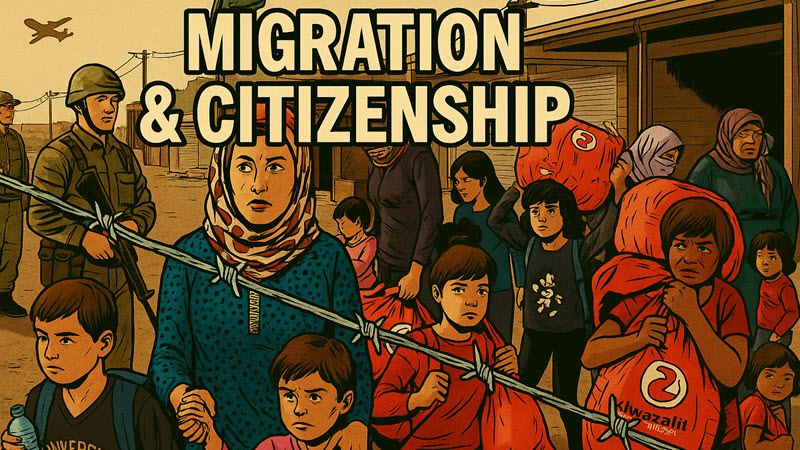
🔍 What Was Tested:
This study refines the idea of cultural threat by treating it explicitly as a zero-sum problem and by specifying concrete cultural rights that Muslims might receive. The goal is to resolve theoretical ambiguity and measurement problems in prior work on why people oppose immigrants.
🧪 How the Study Worked:
Two online experiments were conducted in Germany. Respondents were randomly assigned to one of two scenarios: Muslim cultural rights either replace majority rights (zero-sum) or Muslim rights co-exist with majority rights (non-zero-sum). The design isolates the effect of perceived competition over cultural practices.
📌 Key Findings:
💡 Why It Matters:
This approach tightens the conceptualization and measurement of cultural threat by (1) specifying concrete cultural rights and (2) experimentally manipulating whether those rights are perceived as replacing majority rights or coexisting with them. Findings show that individual predispositions—an inclusionary versus exclusionary mindset—shape how zero-sum frames influence tolerance for Muslim cultural and religious claims. This has implications for interpreting public opinion on immigration and for designing interventions to reduce cultural opposition.
| Zero-Sum Thinking and the Cultural Threat of Muslim Immigrants' Religious Rights was authored by Marc Helbling, Elisabeth Ivarsflaten and Richard Traunmueller. It was published by Sage in CPS in 2026. |