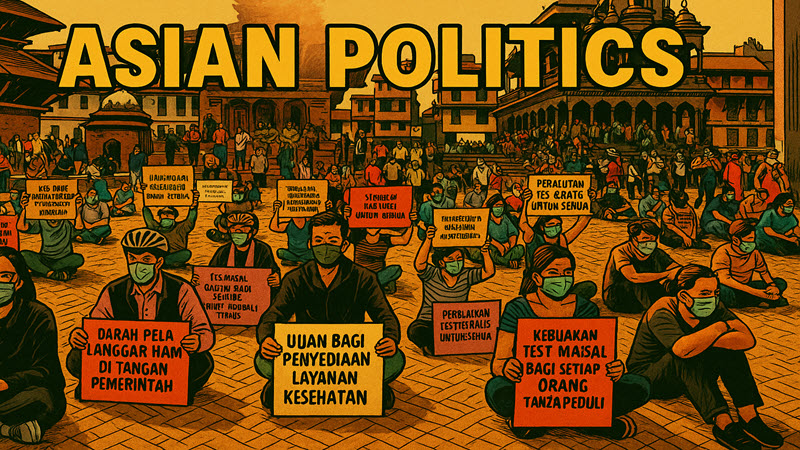
Why Founding Leader Cults Matter
Founding leader personality cults are central to how some states tell stories about themselves and sustain popular loyalty. Paul Schuler, Trung-Anh Nguyen, Yongfeng Tang, and Mohammad Khan examine how these highly visible national narratives originate, asking whether cults always follow from a leader’s personal grab for power or can be intentionally created earlier for collective legitimation.
The Puzzle and Argument
Existing political science accounts tend to link personality cults to late-stage personalization of power, when a leader consolidates control and coerces loyalty. The authors argue for a different pathway they call "cults of legitimation": rival elites sometimes promote an idealized image of a founding leader before full personalization occurs. These elites use the leader’s persona strategically to bind ordinary people to an abstract political community—the nation—rather than simply to the leader’s office.
Psychology: Anthropomorphizing the Nation
Drawing on social psychology, the paper argues that attaching a human face to an otherwise abstract national entity—anthropomorphizing the nation—strengthens emotional attachment more effectively than symbols alone. That emotional attachment helps elites secure broader loyalty without immediate reliance on coercive personalization.
Process Traces From Three East Asian Cases
The authors process-trace the emergence of founding-leader cults in Vietnam, China, and Indonesia to assess the plausibility of their argument. Their historical and documentary tracing follows how rival elites, state institutions, and public campaigns shaped leader images and national narratives prior to or alongside later personalization.
Key Findings
What This Suggests for Studies of Authoritarian Rule
By reframing some personality cults as instruments of elite legitimation rather than only as consequences of personalized rule, the paper highlights an understudied route by which regimes build durable national narratives and mass attachment. The study encourages scholars to pay closer attention to elite competition, symbolic strategy, and psychological mechanisms when tracing the roots of leader cults.
| Founding Leaders and National Narratives: Anthropomorphism and the Roots of Founding Leader Personality Cults in Three East Asian Cases was authored by Paul Schuler, Trung-Anh Nguyen, Yongfeng Tang and Mohammad Khan. It was published by Sage in CPS in 2025. |