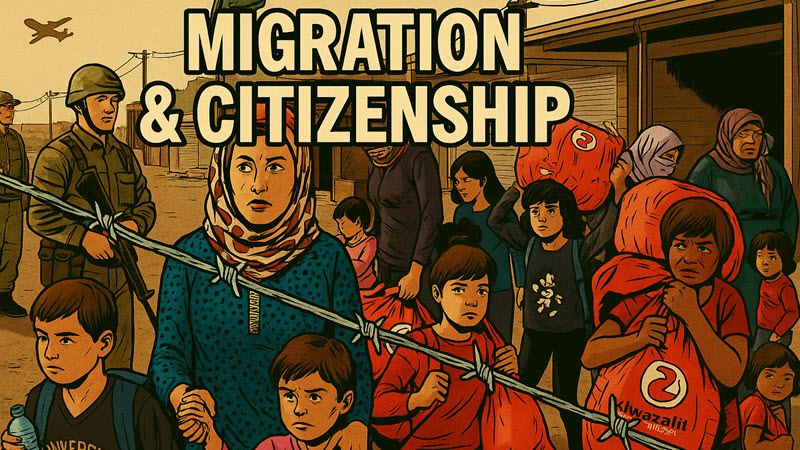
Why Women Might Oppose Immigration
Jieun Park asks why women—contrary to some expectations—often express stronger opposition to immigration than men. Park proposes that this gender gap is shaped by labor market vulnerability: as immigrants enter occupations traditionally held by women, non-immigrant women who occupy more vulnerable job positions may see immigrants as economic competitors rather than partners.
How the Study Tests the Idea
Park tests this argument with two original, nationally representative surveys in Japan that include embedded experiments. Respondents were exposed to information emphasizing the economic necessity of immigrant labor, allowing the study to observe how this framing changes attitudes across gender and occupational groups.
Key Findings
What This Means for Policy and Scholarship
Park's results link the political economy of immigration to gendered labor-market structures, showing that the same factual message can produce opposite attitudinal effects across gender and class lines. The findings imply that migration policymaking and public communications should account for gendered occupational exposure and uneven economic vulnerability to avoid unintended backlash.
Contribution
By combining nationally representative survey experiments with a gendered labor-market lens, Park advances understanding of immigration attitudes and gender politics in a high-income, unequal labor market—offering a model for studying similar dynamics in other countries with persistent gender stratification in employment.
| Gendered Xenophobia? Gendered Interpretation of Immigration and Labor Market Vulnerability was authored by Jieun Park. It was published by Sage in CPS in 2025. |