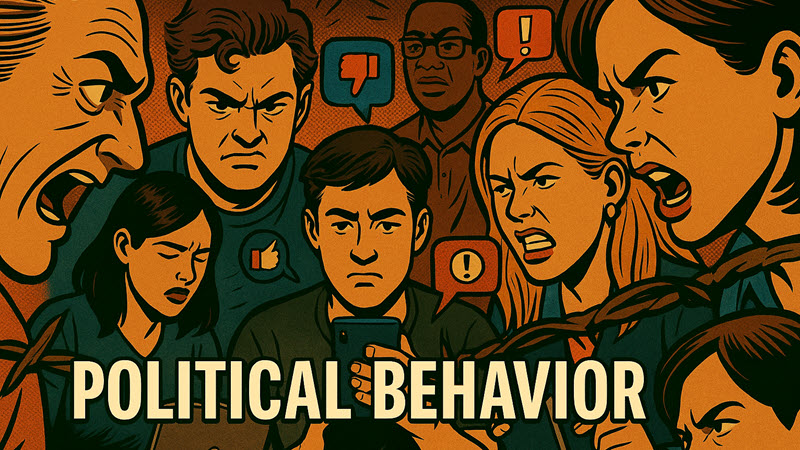
Why This Question Matters: Many advocates promote deliberative mini-publics—small, randomly selected groups that advise or decide on public issues—as a way to boost democratic legitimacy. Micha Germann asks whether the real-world limits of representativeness (small sample sizes and non-response biases) weaken the public credibility of these bodies.
What the Study Tests: Germann reports a pre-registered survey experiment (N = 1,308) that evaluates how deviations from statistical representativeness affect citizens' legitimacy beliefs. The central outcome is perceived process legitimacy: how fair, inclusive, and authoritative respondents view a decision-making process that involves a mini-public.
How the Experiment Works: Respondents completed a survey experiment in which the presence of a mini-public and the degree of its statistical representativeness were systematically varied. The design isolates whether the involvement of a mini-public raises legitimacy perceptions and how sensitive that effect is to small versus large composition biases that mimic nonresponse and small-sample noise.
Key Findings:
What This Means for Reformers: The results temper hopes that mini-publics are an easy fix for legitimacy shortfalls. The legitimacy payoff depends critically on credible representativeness; small-sample variability and nonresponse can undercut public confidence. Practitioners should therefore prioritize sampling procedures, participation incentives, and transparent communication to sustain the perceived fairness and authority of mini-publics.
| Mini-Publics, (Lack of) Representativeness, and Legitimacy Beliefs was authored by Micha Germann. It was published by Cambridge in BJPS in 2025. |