
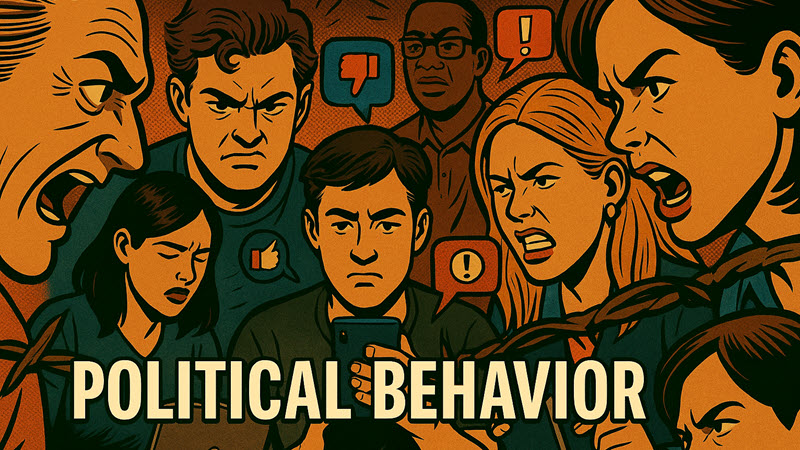
Why Do Anxious Voters Favor Redistribution?
Political psychologists Adam R. Panish and Andrew W. Delton tackle a striking puzzle: liberals report higher levels of distress than conservatives—so why do some people who feel anxious tilt left on economic policy? The authors propose a focused explanation called the social support hypothesis: people who are especially sensitive to threats of social exclusion prioritize policies that provide care and protection for themselves and others.
Theory: The Social Support Hypothesis
The argument links a well-studied personality dimension—neuroticism—to concrete policy preferences. Neuroticism includes an anxiety facet that makes some people particularly alert to social threats and feelings of vulnerability. According to the hypothesis, these individuals favor redistributive social-welfare policies because such policies help maintain social support and reduce the consequences of exclusion, rather than because they endorse the broader left-wing agenda.
How Panish and Delton Tested It
The paper draws on a multi-method design combining experimental and survey evidence. Key elements include:
Key Findings
Why This Matters
These results offer a new explanation for the empirical association between liberalism and psychological distress by tying policy preferences to motives for social support and avoidance of exclusion. The findings refine theories of personality and politics by showing that a specific emotional sensitivity (anxiety about social threats) shapes concrete economic-policy attitudes. This matters for scholars who study political behavior, voter motivation, and the psychological underpinnings of welfare attitudes—and for policymakers and communicators seeking to understand the emotional drivers behind public support for redistribution.
| Why Anxious People Lean to the Left on Economic Policy: Personality, Social Exclusion, and Redistribution was authored by Adam R Panish and Andrew W. Delton. It was published by Cambridge in BJPS in 2025. |


