
What the Study Asks
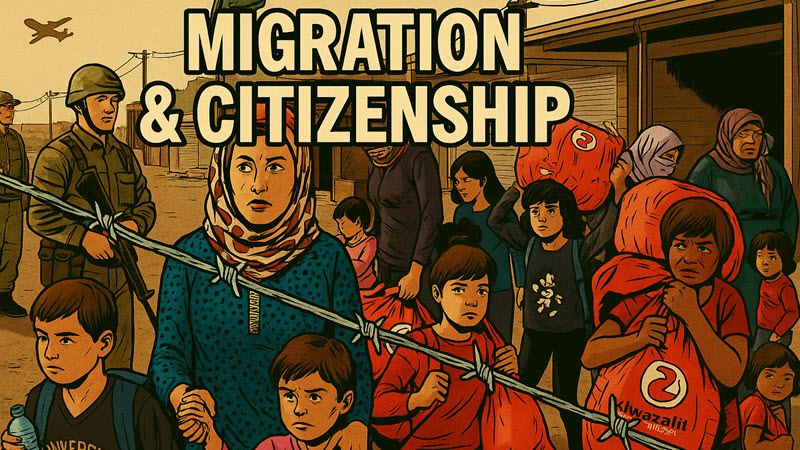
Kristina Simonsen and Tobias Widmann investigate when and why political parties use moral language in debates about immigration. Moral language here means rhetoric that frames immigration in terms of right and wrong, duty, purity, or fairness—claims about fundamental beliefs rather than pragmatic trade-offs. Understanding these dynamics matters because moralized rhetoric can deepen conflict, shape public attitudes, and alter policy debates on a high-salience issue.
How the Study Measures Moral Language
The authors build multilingual moral dictionaries and apply dictionary-based text analysis to parliamentary speeches about immigration from eight Western democracies spanning six decades. This comparative, longitudinal design lets them track changes in moral rhetoric over time and across party families and institutional contexts. They supplement the quantitative text analysis with qualitative coding to examine how moral language is deployed in practice.
What the Authors Test and Find
Simonsen and Widmann assess whether party-level factors (for example, party ideology or the presence of extreme anti-immigrant parties) or the broader elite debate on immigration better explains moralization. Key findings are:
These results challenge the expectation that moralization is driven mainly by extreme, anti-immigrant opposition parties; instead, the overall political climate matters more.
Implications for Parties, Scholars, and Public Debate
The study implies that efforts to reduce moralized immigration rhetoric cannot focus only on marginal parties: when elites polarize around immigration, all parties face incentives to moralize. For scholars, the findings highlight the importance of contextual, cross-national perspectives and careful text-based measurement of moral language. For publics and policymakers, the research suggests that depolarizing elite debate could reduce the moral framing that intensifies conflict over immigration policy.
Article Note
This analysis appears in the British Journal of Political Science and combines large-scale comparative text analysis with qualitative inspection to trace the political drivers and functions of moralized immigration rhetoric across Western democracies.
| When Do Political Parties Moralize? A Cross-National Study of the Use of Moral Language in Political Communication on Immigration was authored by Kristina Bakkær Simonsen and Tobias Widmann. It was published by Cambridge in BJPS in 2025. |


