
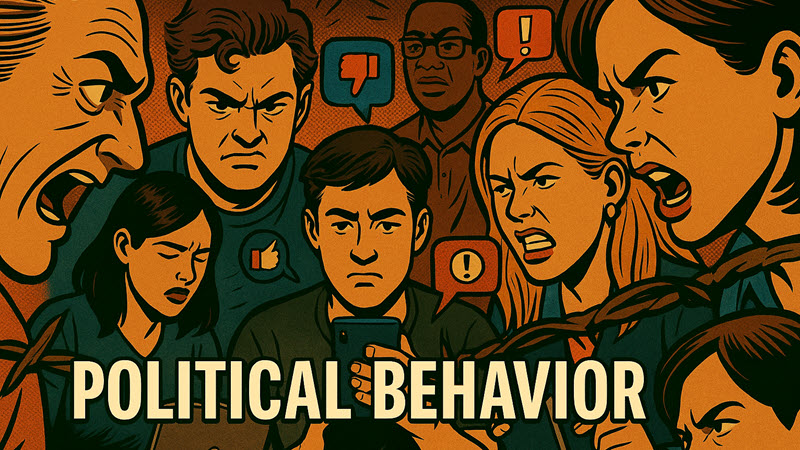
What the Study Asks
Omar Hammoud Gallego investigates whether a dramatic change in news content during the COVID-19 pandemic altered how citizens evaluate democracy. The paper asks whether a shift away from politically divisive coverage toward neutral topics reduced partisan differences in satisfaction with democratic performance in the United Kingdom.
How the Study Was Done
The analysis links a large, representative survey of 201,144 UK respondents to daily measures of news content. Gallego measures media change by scraping 1.5 million tweets from British newspapers and applying topic modeling to track which subjects dominated coverage, along with sentiment analysis to capture tone. Daily media salience and sentiment are then associated with individual-level reports of satisfaction with democracy.
What the Methods Reveal
Key Findings
Why This Matters
The results speak to debates about media framing, affective polarization, and the winner–loser gap in democratic support: temporarily depoliticized news coverage appears capable of softening partisan divides in how citizens judge democratic performance. For scholars and policymakers, the study highlights how shifts in news agendas—even when driven by crises—can reshape civic attitudes toward core democratic institutions.
| News Cycles and Satisfaction with Democracy: How the Pandemic Short-Circuited Media Polarisation was authored by Omar Hammoud-Gallego, Roberto S. Foa and Xavier Romero-Vidal. It was published by Cambridge in BJPS in 2025. |


