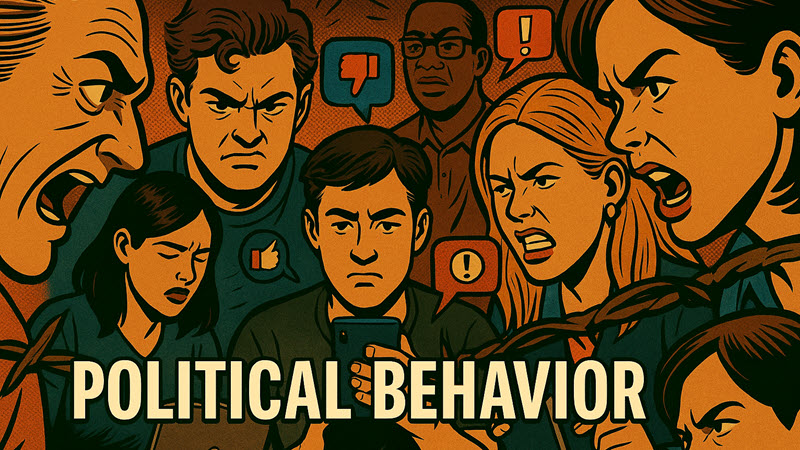
Why Study College Social Influence?
Matthew Pietryka and Brad Gomez investigate how family and peer ties shape young adults' voting. Political participation is often social, but people self-select into friendships, making it hard to separate peer influence from selection. Randomly assigned college roommates provide a rare opportunity to identify causal peer effects on turnout.
Random Roommates as a Natural Experiment
The authors exploit random assignment of first-year roommates to reduce selection bias. They secured consent from over 2,000 students and matched each student to official voter-file records and to publicly available voting histories for the students' parents. This setup lets the study probe short-run peer influence in 2016 and examine whether any effects persist into the 2018 and 2020 elections.
What Was Measured
Key Findings
Why It Matters for Political Behavior
The study shows that everyday peer interactions on campus can shape early voting habits as strongly as family background, and that these socialization processes operate differently for men and women. These findings matter for theories of political socialization and for practical efforts to mobilize young voters on college campuses.
| Parents, Peers, and Political Participation: Social Influence among Roommates was authored by Matthew Pietryka and Brad Gomez. It was published by Cambridge in BJPS in 2025. |