
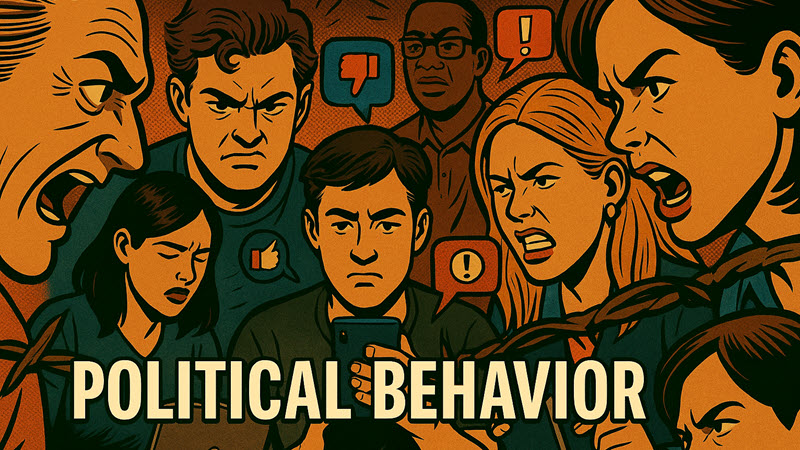
What the Study Asks: Vincenzo Bove, Riccardo Di Leo, Georgios Efthyvoulou, and Harry Pickard investigate whether terrorist violence changes affective polarization—whether citizens feel warmer toward their own partisan side and colder toward opponents—and whether different kinds of attacks produce different reactions.
How the Authors Identify Causal Effects: The authors exploit a series of natural experiments in Great Britain by linking the timing of fatal far‑right and Islamic terrorist attacks to the interview dates of respondents in the British Election Study. This design treats exposure as effectively random around the interview date and isolates short‑term changes in respondents' partisan affect that can be attributed to the attacks.
Key Findings:
Why This Matters: These results show that the political fallout of terrorism is not uniform: the identity and perceived meaning of an attack shape whether it intensifies partisan animosities or temporarily brings people closer together. The paper contributes a causal, survey‑based perspective on how violent events interact with partisan identities and public opinion, with implications for political communication, social cohesion, and how scholars measure short‑run shifts in polarization.
| Terrorism, Perpetrators and Polarization: Evidence from Natural Experiments was authored by Vincenzo Bove, Riccardo Di Leo, Georgios Efthyvoulou and Harry Pickard. It was published by Chicago in JOP in 2025. |


