
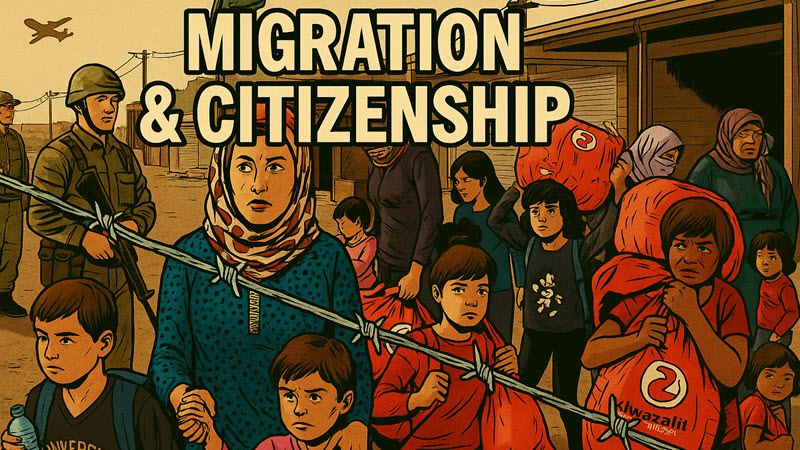
Prior studies find that subtle messaging—by prompting perspective taking—can reduce prejudice. For example, reminding citizens about their family’s displacement has been shown to induce empathy toward refugees.
🧭 What Was Tested
A test of whether drawing explicit parallels between past family displacement and present-day refugees increases sympathy for refugees among descendants of displaced groups.
🧪 How the research was conducted
🔍 Key Findings
⚠️ Why it matters
Light-touch reminders of shared displacement do not reliably generate solidarity and can backfire depending on context. Practical limitations of these subtle interventions suggest a need for further research on scalable, robust strategies for prejudice reduction and policy change.
| Once We Too Were Strangers: Can a Heritage of Displacement Be Leveraged to Build Support for Present-Day Refugees? was authored by Nicholas Sambanis, Matthew D. Simonson and Sule Yaylaci. It was published by Chicago in JOP in 2025. |


