
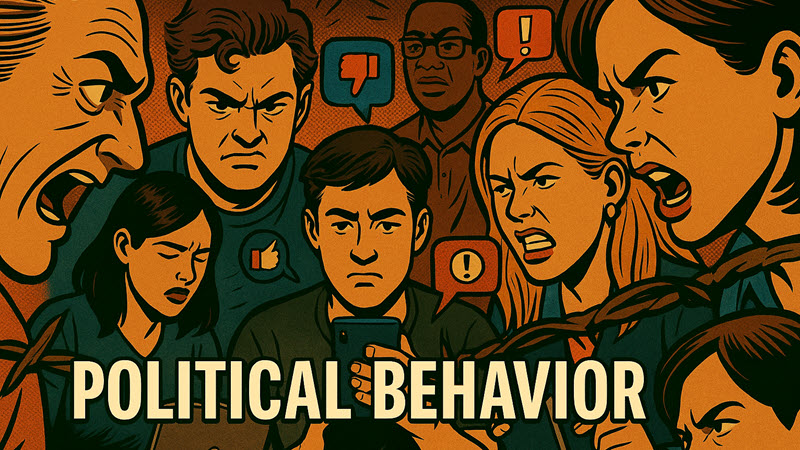
Why This Study Matters: Political norms predict that racially derogatory speech should be broadly rejected, yet politicians increasingly use such rhetoric — sometimes from within voters' own groups. Tabitha Bonilla, Alexandra Filindra, and Nazita Lajevardi investigate how the identity of the speaker and the identity of the audience shape whether people punish or tolerate group-based derogation in political settings.
What the Authors Test: The authors argue that source cues — specifically the race or religious background of a political candidate — change how norms against derogation are applied. They propose that both the speaker's group membership and the observer's socialization into racial norms (differently experienced by White and Black Americans) matter for evaluations of derogatory political messages.
How the Evidence Was Collected: The paper reports four experimental studies that expose respondents to candidates of different backgrounds (White, Black, and Muslim) who make racially derogatory comments targeting Black or Muslim groups. Respondent samples include White and Black Americans, allowing the authors to compare reactions across audience groups.
Key Findings:
What This Means for Political Communication: The findings suggest that voters do not apply norms against derogatory rhetoric uniformly; instead, source cues and the audience's racial experiences shape tolerance and sanctioning. This has implications for how political elites deploy offensive rhetoric, how campaigns manage backlash, and how scholars model the enforcement of expressive norms in racially stratified societies.
Takeaway: Bonilla, Filindra, and Lajevardi show that who speaks matters as much as what is said: race and religious cues of candidates and the racial identity of audiences jointly determine whether derogatory political speech is punished or tolerated, pointing to the need for theories that account for asymmetric socialization across groups.
| How Source Cues Shape Evaluations of Group-Based Derogatory Political Messages was authored by Tabitha Bonilla, Alexandra Filindra and Nazita Lajevardi. It was published by Chicago in JOP in 2022. |


