
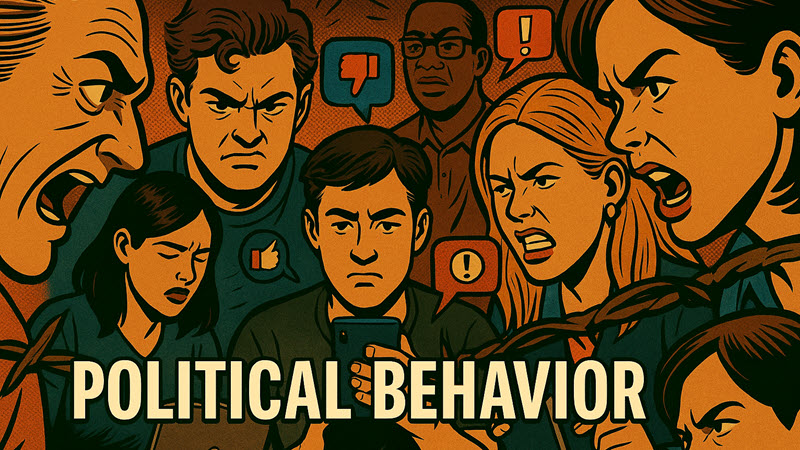
What the Study Asks: Daniel Naftel, Jon Green, Kelsey Shoub, Jared Edgerton, Mallory Wagner, and Skyler Cranmer investigate when televised political panels reproduce or reduce gender inequality among pundits. Televised commentary is a widely visible forum that models political talk for viewers; understanding who speaks and how they are treated matters for both representation and public norms.
How the Authors Study It: The authors analyze more than 6,000 informal, panel-style discussions that aired on U.S. television news between 2000 and 2017. Programs are categorized by conversational norms—"debate-style" shows that encourage adversarial, majoritarian back-and-forth versus "consensus-oriented" programs that favor cooperative discussion. The study examines how a woman’s share of the panel relates to measures of participation and respect, using statistical analysis across programs to identify patterns linked to both gender composition and show format.
Key Findings:
Why This Matters: The study shows that both who sits at the table and the rules of interaction shape who gets to speak and how they are treated on a high-profile public forum. For scholars of representation and media, the findings underscore that program format interacts with gender composition to produce participatory consequences; for producers and viewers, they suggest that altering panel diversity or conversational norms could change the behavioral models televised news presents to the public.
| Meet the Press: Gendered Conversational Norms in Televised Political Discussion was authored by Daniel Naftel, Jon Green, Kelsey Shoub, Jared Edgerton, Mallory Wagner and Skyler Cranmer. It was published by Chicago in JOP in 2025. |


