
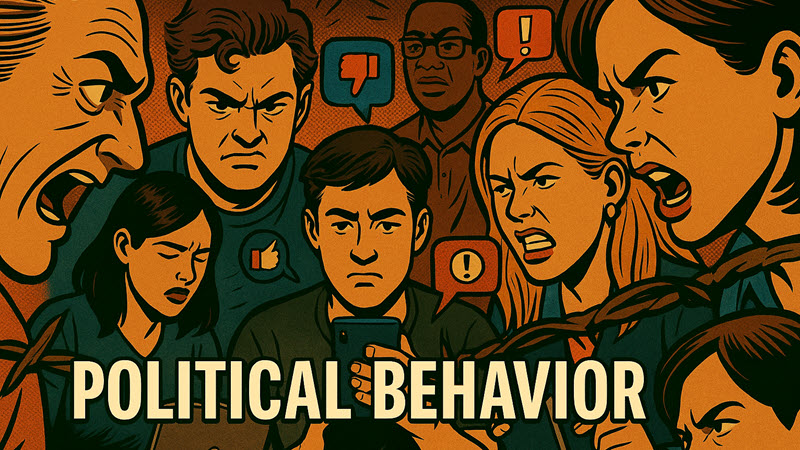
Affective polarization—strong emotional divides based on partisanship—actually causes perceived political division. This relationship stems from feelings like anger and contempt toward the opposing party.
New Data
Using two sets of nationally representative panel data spanning 1992–1996 and another period (2008-2009), we tracked how affective orientations predicted perceptions of polarization over time. The findings clearly show a causal link from emotional feelings to perceived divisions.
What We Found
Affective polarization consistently drives perceived political division across different data sets.
Perceived polarization doesn't predict future affective orientation changes.
The relationship between these forms of polarization varies significantly by the reader's familiarity with politics:
These nuanced findings highlight that emotions shape our understanding of political divisions more than we previously thought.
Why It Matters
Understanding this causal relationship helps explain why emotional reactions toward opponents often lead to increased polarization. The findings also suggest potential intervention points—perhaps targeting affective responses could reduce perceived divides.
| The Role of Affective Orientations in Promoting Perceived Polarization was authored by Miles Armaly and Adam Enders. It was published by Cambridge in PSR&M in 2021. |


