🛡️ How safety rules can hide political aims
Health and safety standards provide a convenient public justification for government action while also creating ambiguity about intent. Although often studied as veiled protectionism, these standards can be deployed for goals beyond protecting domestic industry—most notably, as instruments of political pressure.
📦 New evidence from Chinese border rejections (2011–2019)
📊 Key finding: enforcement as retribution
Analysis shows that import refusals have been used systematically as a tool of political retribution: rather than solely safeguarding consumers or shielding domestic producers, refusals have been applied in ways that punish states perceived to have acted against China’s interests.
❗ Why this matters
This research reframes non-tariff regulatory measures as instruments of foreign policy and coercive diplomacy. Interpreting health and safety standards only as protectionism misses their potential role in state-to-state punishment and regulatory statecraft.
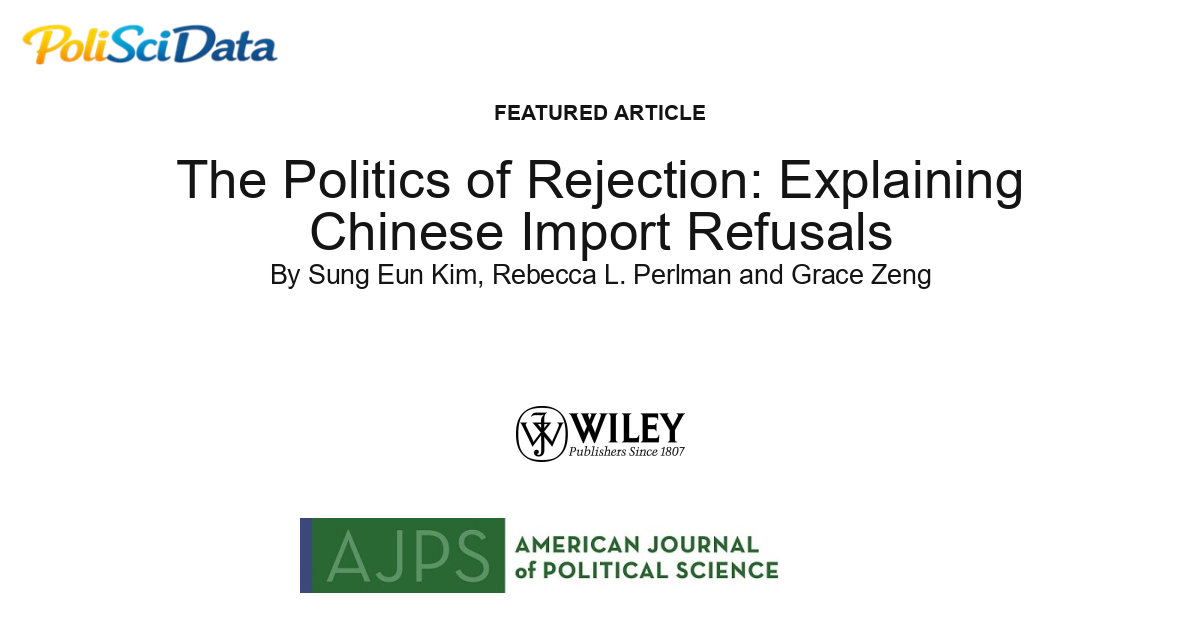
| The Politics of Rejection: Explaining Chinese Import Refusals was authored by Sung Eun Kim, Rebecca L. Perlman and Grace Zeng. It was published by Wiley in AJPS in 2025. |