
FIND DATA: By Journal | Sites   ANALYZE DATA: Help with R | SPSS | Stata | Excel   WHAT'S NEW? US Politics | IR | Law & Courts🎵
   FIND DATA: By Journal | Sites   WHAT'S NEW? US Politics | IR | Law & Courts🎵
WHAT'S NEW? US Politics | IR | Law & Courts🎵
If this link is broken, please
You can also
(will be reviewed).

Hostile Security Environments Amplify Gender Bias in Leadership Perceptions

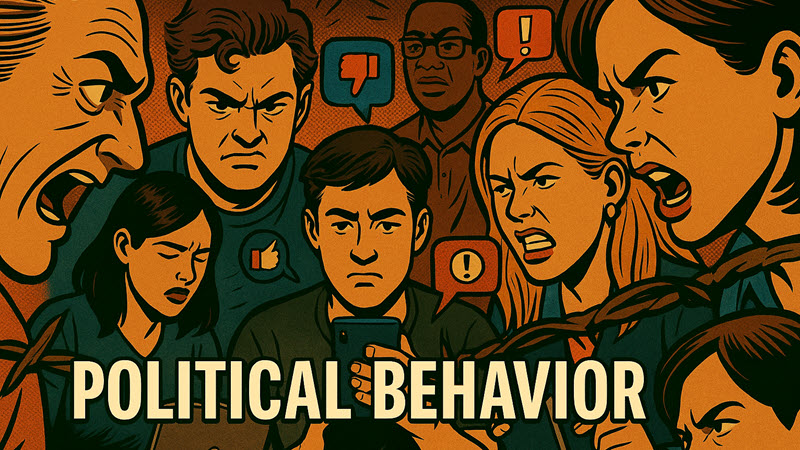
Political Behavior subfield banner

This study investigates how a country's international security context affects bias against female leaders.

Survey data from over 200,000 individuals across 84 countries reveals that more hostile environments correlate with greater agreement that men make better political leaders than women. 🔍

Three mechanisms explain this relationship: increased demand for defense, shifts in ideological orientations, and heightened societal militarization. ⚙️

Key Findings:

* Security threat perception strengthens male preference for leadership roles.

* This effect is amplified across diverse political systems globally.

* Existing literature lacked such cross-national evidence linking security environments to gender bias.

Implications: The findings suggest that international relations dynamics significantly shape domestic perceptions of female leadership capability, offering new insights into the representation gap. 🌍⚖️
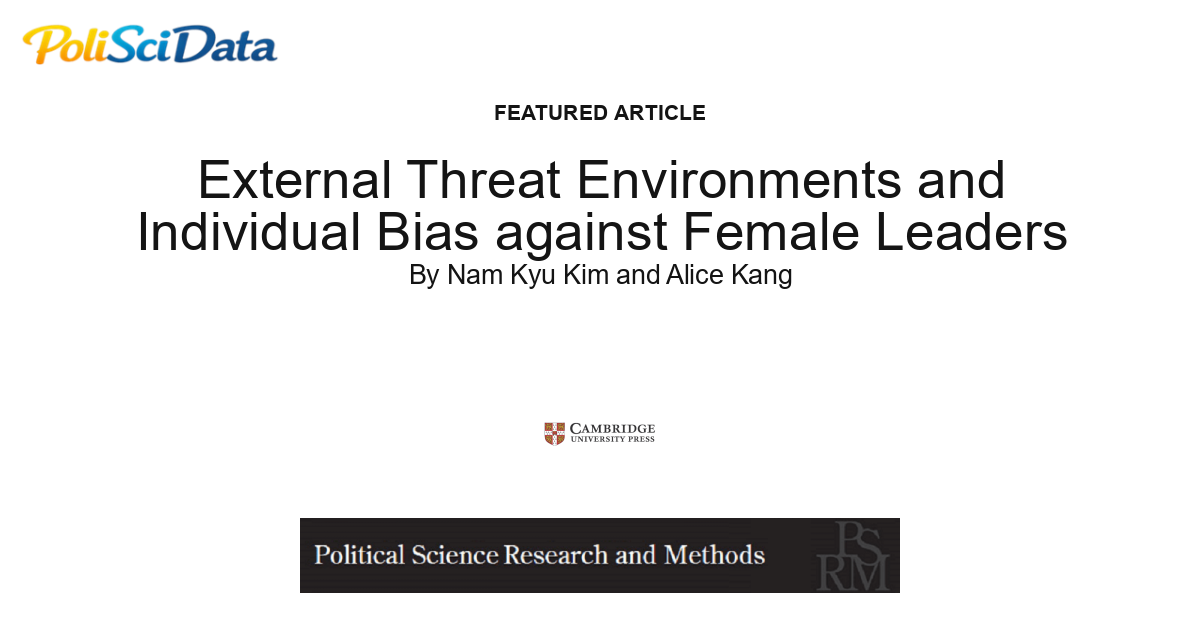
Article card for article: External Threat Environments and Individual Bias against Female Leaders
External Threat Environments and Individual Bias against Female Leaders was authored by Nam Kyu Kim and Alice Kang. It was published by Cambridge in PSR&M in 2021.
Find on Google Scholar
Find on Cambridge University Press
Political Science Research & Methods


