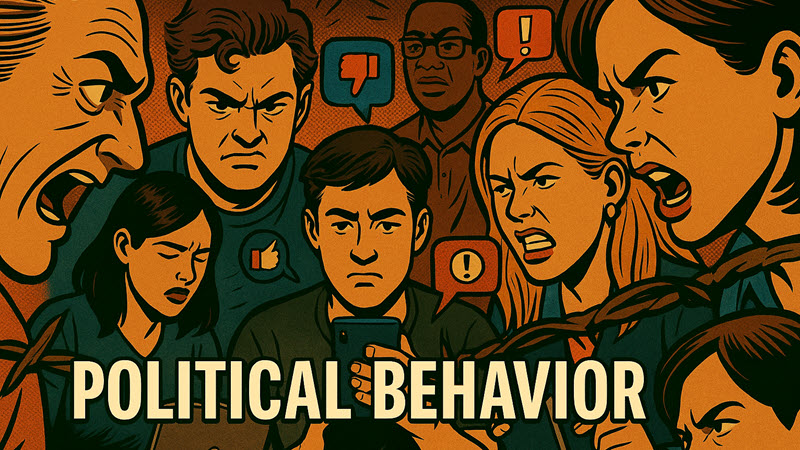
This research investigates how gender influences policy persuasion in partisan environments.
Respondent Partisanship & Candidate Gender Effects
Survey experiment with diverse American respondents; Random variation of candidate genders across four policy debates; Strongest effects observed on birth control access regardless of candidate stance;
Representation Implications & Further Analysis Needed
Findings suggest gender functions primarily as a partisan cue in political representation discussions; Questions remain about how these dynamics apply across different policy domains and candidate genders; The role of voters' own gender identity in shaping this effect requires additional investigation.
| Gender and Policy Persuasion was authored by Georgia Anderson-Nilsson and Amanda Clayton. It was published by Cambridge in PSR&M in 2021. |