
Why This Matters
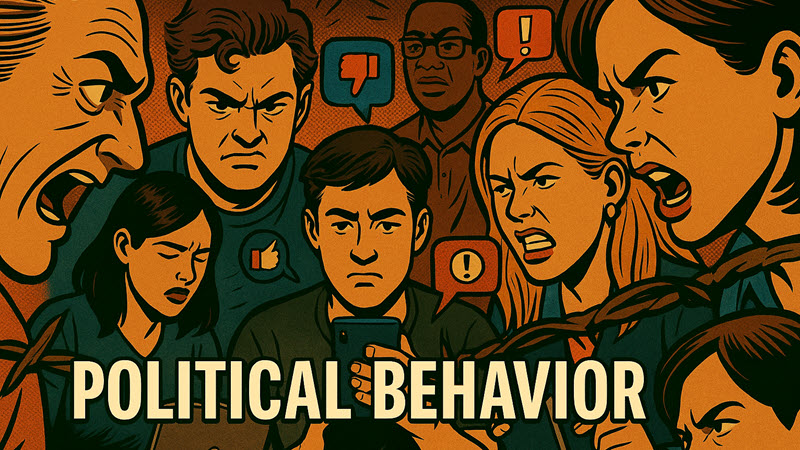
Affective polarization—partisans’ dislike and distrust of the political out-group—has risen to historic highs in the United States. While prior work links this hostility to nonpolitical behaviors (dating, consumer choices), James N. Druckman, Samara Klar, Yanna Krupnikov, Matthew Levendusky, and John Barry Ryan investigate whether partisan animus also reshapes political beliefs about ostensibly neutral institutions and national responses.
What the Authors Ask
Do Americans who feel strong animus toward the other party politicize evaluations of apolitical targets—specifically, do they treat the abstract label “the United States” as synonymous with the incumbent administration when judging the COVID-19 response? The authors test whether affective polarization, apart from party identification, alters how people interpret and evaluate such targets.
How the Study Works
Key Findings
What This Means For Political Behavior
The results show that partisan animus can reshape citizens’ perceptions of ostensibly neutral political targets, turning national institutions or collective actors into extensions of the opposing party. This has consequences for how information about government performance is interpreted and for efforts to build cross-partisan consensus on policy issues.
| How Affective Polarization Shapes Americans' Political Beliefs was authored by James N. Druckman, Samara Klar, Yanna Krupnikov, Matthew Levendusky and John Barry Ryan. It was published by Cambridge in JXPS in 2021. |


