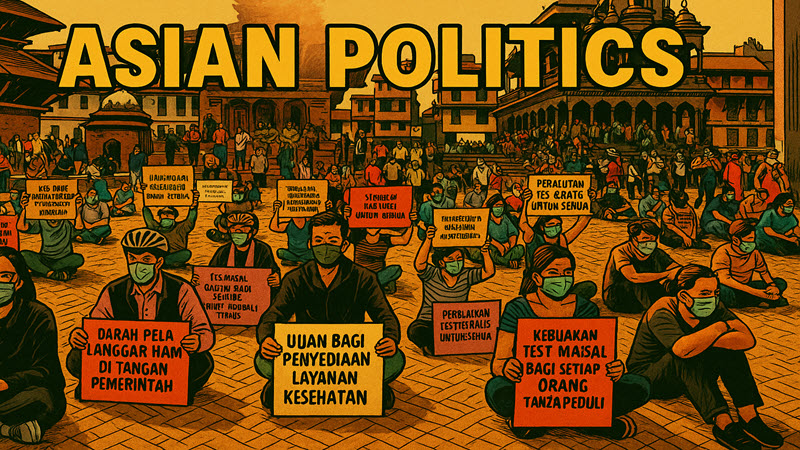
📚 Why This Question Matters
Foreign policy belief systems have been studied extensively, but nearly all work focuses on Western democracies—chiefly the United States. The current security environment raises the question of whether elites in other regional powers hold foreign policy views with a similar internal structure. This article investigates that question for India, examining variance, structure, and shared elements in elite opinion.
🧭 How the Study Tests U.S.-Based Claims Using an Original Indian Elites Dataset
🔎 Key Findings
⚖️ Why It Matters
These results show that analytic tools developed from U.S. opinion research can be adapted to understand elite foreign policy belief systems in major non-Western powers, with important implications for comparative politics, the study of belief-system structure beyond the Global North, and interpretations of how domestic ideology informs foreign policy preferences.
| The Foreign Policy Attitudes of Indian Elites: Variance, Structure, and Common Denominators was authored by Sumit Ganguly, Timothy Hellwig and William R. Thompson. It was published by Oxford in FPA in 2016. |