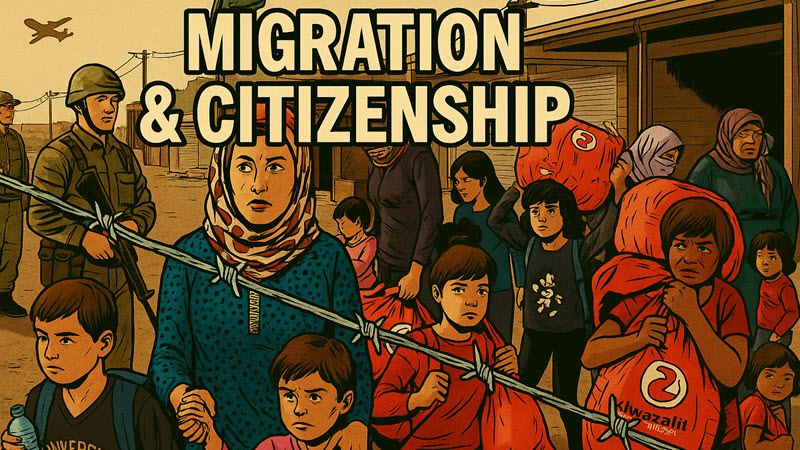
The forced return of migrants with criminal records can transmit crime across borders. This study quantifies how US deportations of convicts affect violent crime in migrants’ countries of origin.
📊 Data & Sample: A cross-country panel covering up to 123 countries from 2003–2014 is used to link US deportations of people with prior criminal histories to national homicide rates.
🔍 How the relationship is identified: Country-specific factors are controlled with fixed effects, and a causal interpretation is supported through an instrumental variable strategy that exploits spatial and temporal variation in migrant populations’ exposure to state-level immigration policies in the United States.
📈 Key findings:
⚖️ Why it matters: Results highlight a transnational channel through which domestic immigration enforcement can influence public safety abroad, with particular implications for Latin American and Caribbean states and for policy debates about the external consequences of deportation practices.
| Exporting Murder: US Deportations and the Spread of Violence was authored by Christian Ambrosius and David Leblang. It was published by Oxford in ISQ in 2020. |