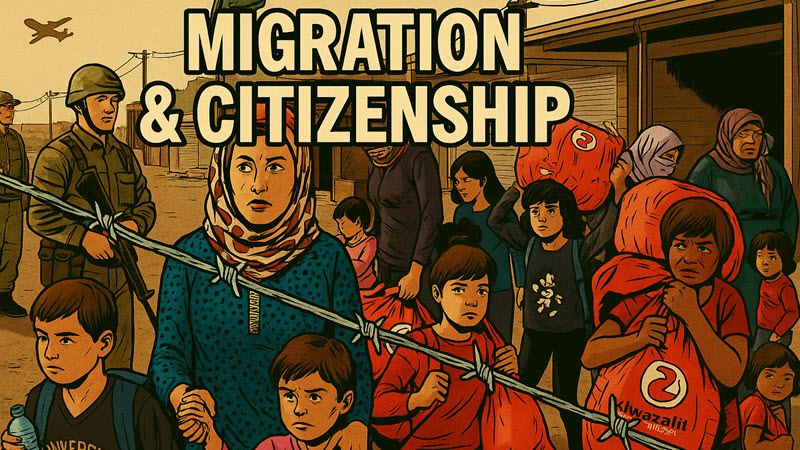
The study asks why citizens in the Middle East and North Africa express stronger opposition to some migrant groups—especially sub‑Saharan African migrants—and how local context shapes which perceived threats matter.
📋 A National Survey of 2,700 Moroccan Citizens
A nationally representative survey of 2,700 native Moroccan citizens provides the empirical foundation. The survey measures opposition to different migrant subtypes and respondents' perceptions of cultural, economic, and security threats.
🔎 Which Explanations Were Tested
📈 Key Findings
🌍 Why This Matters
Findings demonstrate that explanations developed in Western European contexts do apply in the MENA region, but their explanatory power depends on local community characteristics. Highlighting postmaterialism at the community level advances understanding of when cultural versus economic threat narratives will dominate public attitudes toward migrants, with implications for policy debates and comparative migration research.
| Community-Level Postmaterialism and Anti-Migrant Attitudes: An Original Survey on Opposition to Sub-saharan African Migrants in the Middle East was authored by Matt Buehler, Kristin Fabbe and Kyung Joon Han. It was published by Oxford in ISQ in 2020. |