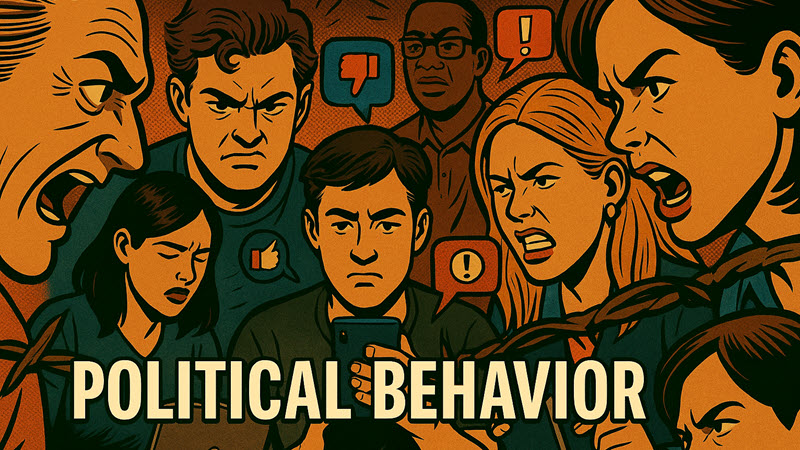
🔍 What This Study Asks
Do political parties shape opinion even when citizens have a strong personal stake? The focus is a collective bargaining conflict in Denmark over public employees’ salary and work rights, where party signals sometimes ran counter to workers’ immediate economic interests.
🧭 How the Research Was Set Up
An experimental design exploits a naturally occurring, sharp variation in party cues that arose during the bargaining dispute. Key features:
📈 What Was Found
🔎 Why It Matters
These results challenge the assumption that party influence simply overrides material interests. In a context where self-interest was strongly mobilized and party positions sometimes conflicted with that interest, parties still shaped opinion—but often by damping extreme demands rather than fueling them. This suggests a previously underappreciated role for parties in moderating, not escalating, polarized or extreme preferences during contested policy moments.
| Party over Pocketbook? How Party Cues Influence Opinion When Citizens Have a Stake in Policy was authored by Rune Slothuus and Martin Bisgaard. It was published by Cambridge in APSR in 2021. |