
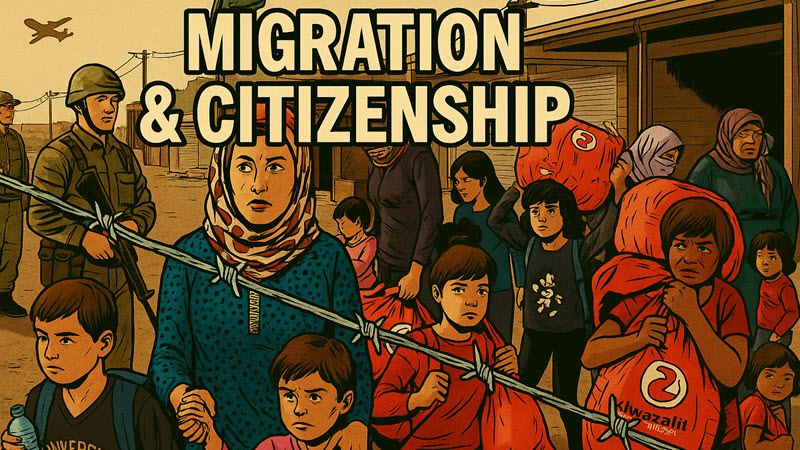
UNHCR promotes voluntary repatriation as the preferred solution to refugee crises, but refugees' preferences about return vary widely and are poorly understood.
🧭 What This Paper Asks
This research examines which refugees prefer to go home and why, proposing that return preferences arise from a trade-off between ties to origin and ties to host communities and from how wartime violence shapes refugees' sense of competency.
🧠 How Return Preferences Are Thought To Form
📊 Survey of Syrian Refugees in Lebanon
🔑 Key Findings
🚨 Why It Matters
These results show that repatriation preferences are not uniform: past violence and the balance of attachments between origin and host influence decisions about return. Policymakers and humanitarian agencies should account for both anchoring dynamics and the complex effects of trauma when designing durable-solution policies and reintegration assistance.

| Journey Back Home: Violence, Anchoring, and Refugee Decisions to Return was authored by Faten Ghosn, Tiffany S. Chu, Miranda Simon, Alex Braithwaite, Michael Frith and Joanna Jandali. It was published by Cambridge in APSR in 2021. |


