
FIND DATA: By Journal | Sites   ANALYZE DATA: Help with R | SPSS | Stata | Excel   WHAT'S NEW? US Politics | IR | Law & Courts🎵
   FIND DATA: By Journal | Sites   WHAT'S NEW? US Politics | IR | Law & Courts🎵
WHAT'S NEW? US Politics | IR | Law & Courts🎵
If this link is broken, please
You can also
(will be reviewed).

Helping Migrants Register Boosts Voting: Bureaucracy, Not Origin Ties, Blocks Inclusion

Migration Citizenship subfield banner

📌 The Problem

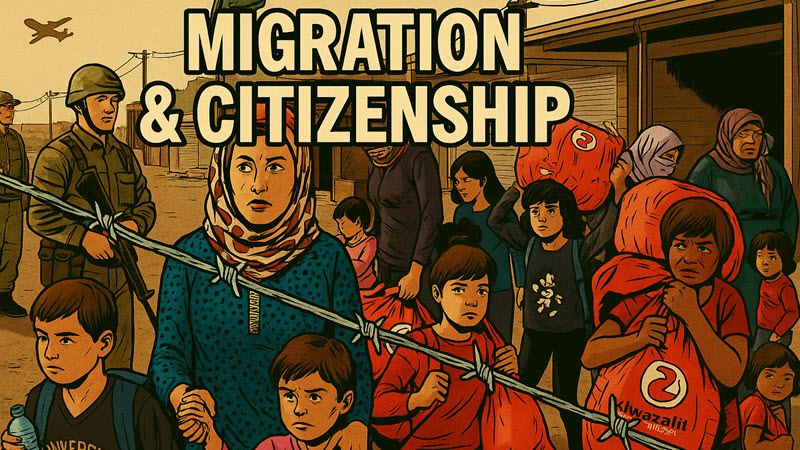
Migrants in rapidly urbanizing developing-country cities vote far less than local-born residents. Three potential explanations were tested: strong socioeconomic ties to origin regions, administrative hurdles to enrollment that hit newcomers harder, and political ostracism by antimigrant elites.

📍 Field Experiment: Door-to-Door Registration in Two Indian Cities

A randomized door-to-door drive directly assisted internal migrants to register to vote in two Indian cities. An additional treatment arm notified local politicians about the registration drive in a subset of localities. Outcomes tracked included local registration and turnout in the next election.

🔎 Hypotheses Tested

  • Migrants’ socioeconomic links to origin regions reduce willingness to register locally.
  • Bureaucratic enrollment obstacles disproportionately discourage newcomers from registering.
  • Antimigrant politicians suppress migrant registration or ignore migrant voters.

✅ Key Findings

  • Ties to origin regions do not predict migrants’ willingness to become registered locally.
  • Direct assistance in navigating the electoral bureaucracy raised migrant registration by 24 percentage points and substantially increased turnout in the subsequent election.
  • Informing politicians about the drive did not lead them to ignore new migrant voters; instead, elites amplified campaign efforts in response.

💡 Why It Matters

Onerous registration requirements are a major barrier to political incorporation and therefore to the well-being of migrant communities in fast-urbanizing settings. These results also have implications for policies aimed at assimilating naturalized but politically excluded cross-border immigrants.
Article card for article: Overcoming the Political Exclusion of Migrants: Theory and Experimental Evidence from India
Overcoming the Political Exclusion of Migrants: Theory and Experimental Evidence from India was authored by Gareth Nellis and Nikhar Gaikwad. It was published by Cambridge in APSR in 2021.
Find on Google Scholar
Find on Cambridge University Press
American Political Science Review

