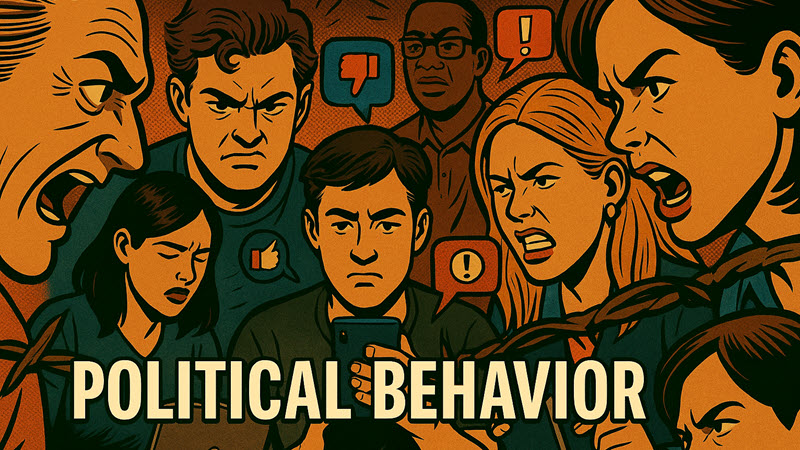
New research investigates how stereotypes about party supporters fuel partisan polarization.
Data & Methods: Using survey data and experimental approaches with diverse participants representing different political ideologies.
Key Findings: Individuals often form oversimplified perceptions of their own party members versus the opposition, leading to significant misalignment in views across party lines. These stereotypes actively shape cross-party animosity rather than merely reflect it.
Why It Matters: This distinction between descriptive representation (what parties actually stand for) and prescriptive representation (how people wish them to represent) has profound implications for understanding political conflict, designing effective governance structures, and crafting strategies to bridge partisan divides.
The study suggests that combating polarization requires addressing these ingrained stereotypes about what party membership entails.
| Pigeonholing Partisans: Stereotypes of Party Supporters and Partisan Polarization was authored by Jacob E. Rothschild, Adam J. Howat, Richard M. Shafranek and Ethan C. Busby. It was published by Springer in Pol. Behav. in 2019. |