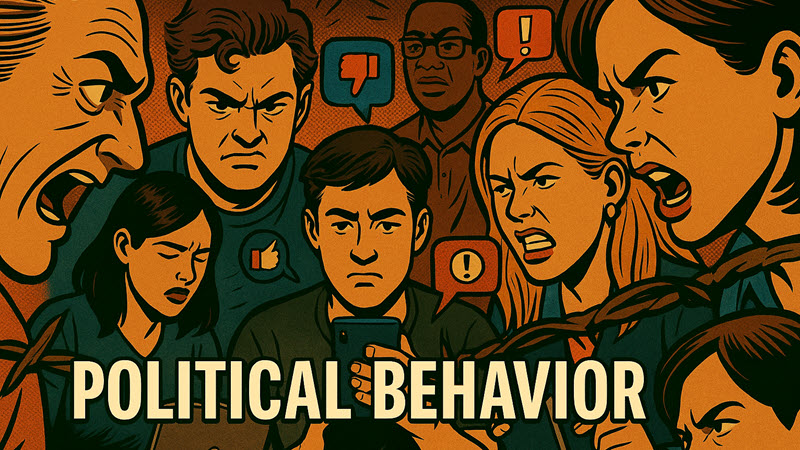
This study investigates perceptions of polarization among Americans by examining their discussion networks.
Data & Methods: We analyzed data from a national survey to map interpersonal conversation patterns in the U.S. across partisan lines.
We employed network analysis techniques to identify key discussion communities and assess how issues propagate through them.
Key Findings: Contrary to popular belief, our results indicate American electorates maintain relatively moderate cross-partisan networks.
These interactions foster nuanced political perceptions despite widespread media reports about increasing polarization.
People engage with diverse viewpoints more often than previously understood, affecting their issue saliency and ideological positioning.
Why It Matters: The findings suggest political discourse is less compartmentalized by partisanship than common narratives indicate.
This has implications for understanding how citizens form opinions on divisive issues like climate change or immigration policy.
| Discussion Networks, Issues, and Perceptions of Polarization in the American Electorate was authored by Jeffrey Lyons and Anand E. Sokhey. It was published by Springer in Pol. Behav. in 2017. |