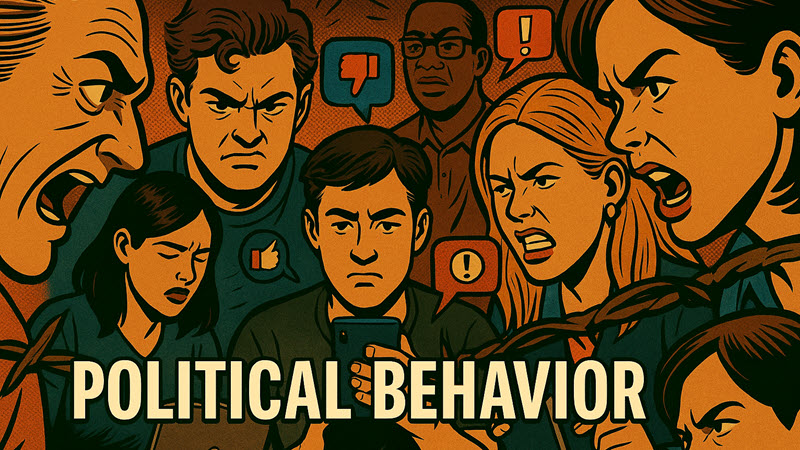
This study investigates why individuals often align their political stances with the majority during discussions.
Data & Methods
- Analysis of social media interactions from across multiple countries.
- Examination of focus group transcripts and online poll responses over a two-year period.
- Use of content analysis to track stance changes.
Key Findings
- Political discussions lead to significant shifts in expressed opinions toward the average view, regardless of initial conviction strength.
- Even when privately unconvinced, individuals publicly adjust their positions to avoid social discord or appear reasonable.
- This effect is more pronounced among highly educated groups and in polarized digital environments.
Implications for Political Science Research
- Challenges traditional views on opinion formation as purely reflective of internal beliefs.
- Illuminates the role of social pressure in shaping political discourse, even when individuals disagree internally.
- Offers insights into how public discussions may erode polarization or dilute distinctive viewpoints.