FIND DATA: By Journal | Sites   ANALYZE DATA: Help with R | SPSS | Stata | Excel   WHAT'S NEW? US Politics | IR | Law & Courts🎵
   FIND DATA: By Journal | Sites   WHAT'S NEW? US Politics | IR | Law & Courts🎵
WHAT'S NEW? US Politics | IR | Law & Courts🎵
If this link is broken, please report as broken. You can also submit updates (will be reviewed).

Why 'Fake News' Warnings Could Actually Harm Democracy

Misinformation WarningTainted Truth EffectRetrospective CorrectionPolitical MemoryPolitical BehaviorPol. Behav.Dataverse
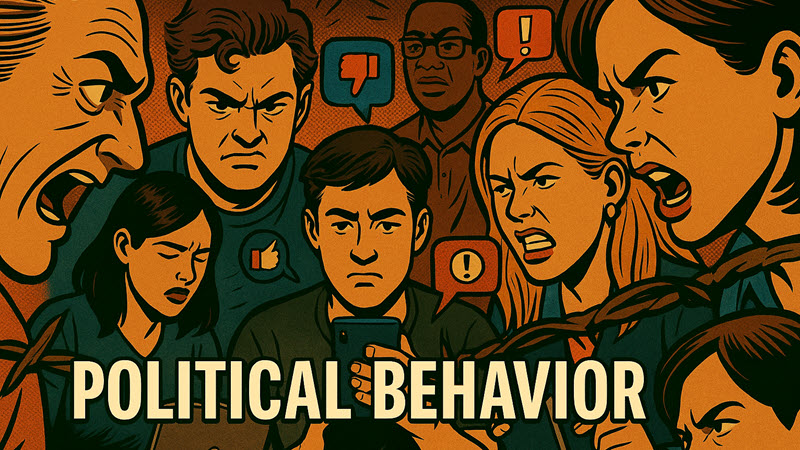
Political Behavior subfield banner

New research explores how misinformation warnings impact political discourse.

📰 Warnings of Misinformation

While many corrections about false news are valid, the article highlights a less discussed problem: misleading labels on legitimate news.

🔍 What We Found

* Valid retrospective warnings help people discard clearly false information (though weakly).

* Incorrectly labeling authentic news as inaccurate significantly harms its credibility and leads to rejection of factual content.

* This 'tainted truth effect' interferes with the formation and retention of political knowledge.

🤔 The Puzzle

The "fake claims about fake news" phenomenon seems counterproductive despite potentially serving a valuable purpose. How can legitimate attempts to fight misinformation backfire?

🧠 Why It Matters for Political Science

Understanding these unintended consequences is crucial as misinformation warnings become increasingly common in political media and discourse.

Article card for article: Fake Claims of Fake News: Political Misinformation, Warnings, and the Tainted Truth Effect
Fake Claims of Fake News: Political Misinformation, Warnings, and the Tainted Truth Effect was authored by Melanie Freeze, Mary Baumgartner, Peter Bruno, Jacob Gunderson, Joshua Olin, Morgan Ross and Justine Szafran. It was published by Springer in Pol. Behav. in 2021.
Find on Google Scholar
Find on JSTOR
Find on Springer
Political Behavior
Edit article record marker