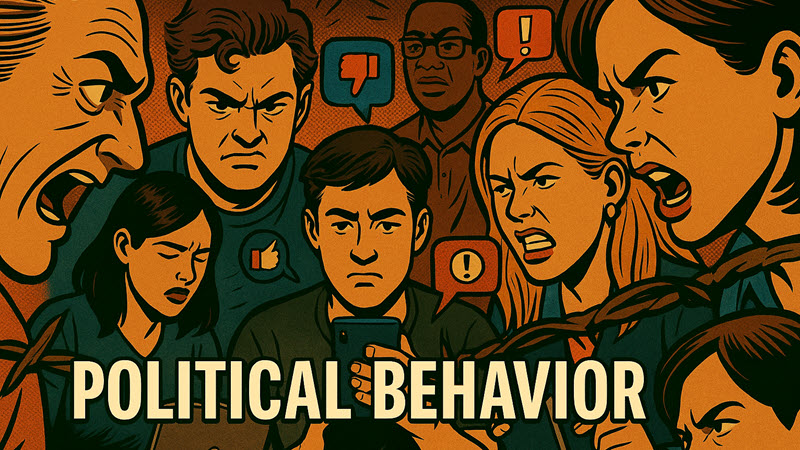
Introduction: Have you ever questioned the accuracy of a political poll but still felt confident in its findings once it confirmed your views? New research suggests this isn't an isolated suspicion—this tendency toward confirmation bias actually strengthens our trust in polls, even when they're demonstrably flawed.
The Puzzle: When does polling information become "authoritative" enough to override strong partisan feelings?
New Findings: Using a large-scale survey experiment design across multiple countries, we demonstrate that the "consensus effect"—the perception of widespread agreement among polls—intensifies confirmation bias in political attitudes. Even participants aware of polling inaccuracies gave significantly more weight to poll results matching their views.
Why It Matters: This discovery reveals a potentially dangerous feedback loop: Confirmation bias protects our preferred information sources, including polls, making them even more influential regardless of quality. The findings have important implications for understanding democratic discourse and how citizens process political information in an era saturated with polling data.
Limitations & Caveats: While we find this effect robust across partisan divides, the results may differ when considering self-selected versus professionally conducted surveys.
| All the Best Polls Agree With Me: Bias in Evaluation of Political Polling was authored by Gabriel Madson and D. Sunshine Hillygus. It was published by Springer in Pol. Behav. in 2020. |