
FIND DATA: By Journal | Sites   ANALYZE DATA: Help with R | SPSS | Stata | Excel   WHAT'S NEW? US Politics | IR | Law & Courts🎵
   FIND DATA: By Journal | Sites   WHAT'S NEW? US Politics | IR | Law & Courts🎵
WHAT'S NEW? US Politics | IR | Law & Courts🎵
If this link is broken, please report as broken. You can also submit updates (will be reviewed).

Minority Groups Reward Political Participation More Than Whites

Political Participation NormsRacial Asymmetry RewardsSurvey ExperimentsAmerican Community SurveyPolitical BehaviorAPSR2 R files8 datasetsDataverse
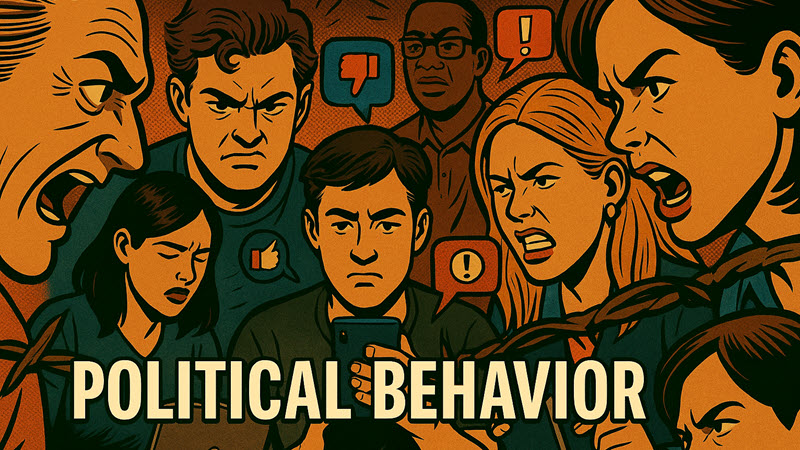
Political Behavior subfield banner

Social norms motivate political behaviors, but their activation depends on race and neighborhood context in the United States.

Survey Experiment Findings:

* Whites, Blacks, and Latinos conceptualize political participation differently.

* Minority groups (Blacks and Latinos) often provide greater social incentives for participation than White respondents.

The study combines original survey data with geographic information from the American Community Survey to reveal that neighborhood characteristics outweigh individual demographics in predicting these norms.

Key Implications:

This nuanced understanding of race, place, and political behavior underscores the importance of incorporating contextual factors when analyzing participation dynamics in America's diverse landscape.
Article card for article: What Makes a Good Neighbor? Race, Place, and Norms of Political Participation
What Makes a Good Neighbor? Race, Place, and Norms of Political Participation was authored by Allison Anoll. It was published by Cambridge in APSR in 2018.
Find on Google Scholar
Find on JSTOR
Find on CUP
American Political Science Review
Edit article record marker

