This research investigates how policymakers interpret signals during high-stakes diplomacy, focusing on the 1958-63 standoff. Contrary to conventional wisdom that emphasizes public and private communications, findings demonstrate material actions exert a stronger influence.
Our analysis utilizes over 18,000 digitized declassified documents reflecting both diplomatic channels (public & private statements) and policy actions during this period. Leveraging advanced statistical learning techniques, we uncover two key insights:
Analyzing document content reveals the inherent noise in public statements versus the precision achievable through private channels. White House assessments were significantly swayed by messages from behind closed doors, suggesting these communication pathways are more consequential for policy evaluation than previously thought.
These findings challenge assumptions within crisis bargaining literature and underscore material actions' role as primary signal carriers.
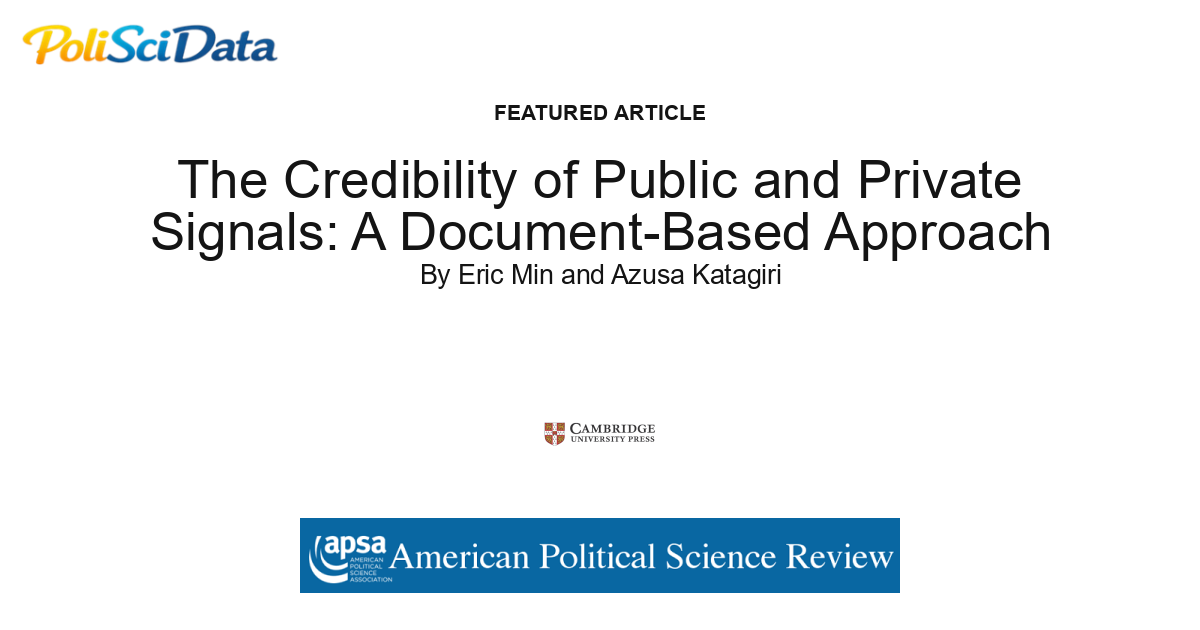
| The Credibility of Public and Private Signals: A Document-Based Approach was authored by Eric Min and Azusa Katagiri. It was published by Cambridge in APSR in 2019. |