FIND DATA: By Journal | Sites   ANALYZE DATA: Help with R | SPSS | Stata | Excel   WHAT'S NEW? US Politics | IR | Law & Courts🎵
   FIND DATA: By Journal | Sites   WHAT'S NEW? US Politics | IR | Law & Courts🎵
WHAT'S NEW? US Politics | IR | Law & Courts🎵
If this link is broken, please
You can also
(will be reviewed).

Fearful? Angry? New Study Shows Extreme Affective Polarization is Automatic

American Politics subfield banner

Researchers examine the surprising rise of affective polarization among American partisans. Using implicit, explicit, and behavioral measures, they demonstrate how negative feelings toward opposing parties have become ingrained.

Implicit & Explicit Bias Measures:

* Implicit (automatic) hostility toward the out-party is common in voters' minds.

* Affective polarization based on party is nearly as strong as racial polarization.

Behavioral Consequences:

* Partisans show discrimination against opposing partisans, sometimes exceeding racial divides.

* This animosity increases because norms against openly expressing negative sentiment are weak.

The findings suggest that partisan feelings shape political behavior in powerful ways.
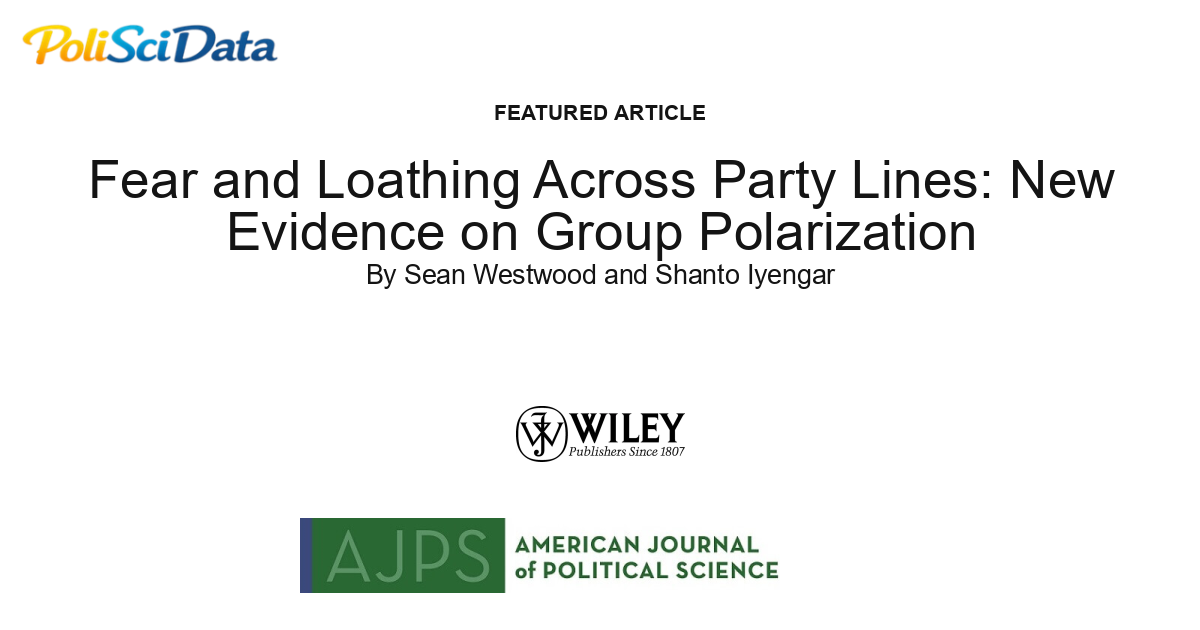
Article card for article: Fear and Loathing Across Party Lines: New Evidence on Group Polarization
Fear and Loathing Across Party Lines: New Evidence on Group Polarization was authored by Sean Westwood and Shanto Iyengar. It was published by Wiley in AJPS in 2015.
Find on Google Scholar
Find on Wiley
American Journal of Political Science