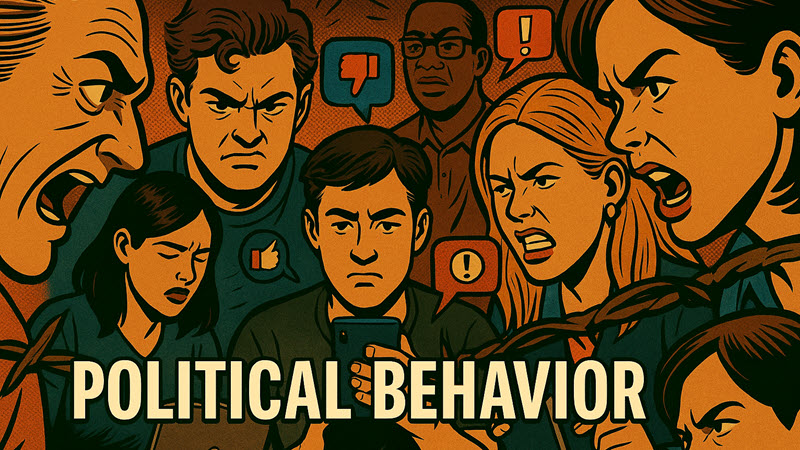
Voters don't always misperceive risk magnitudes—even when highly informed—according to a new study. Instead, their priorities often reflect moral judgments about deserving victims and government's proper role in society.
This research, based on survey responses from 3,000 Americans, shows that evaluations of nine victim-status dimensions explain policy preferences better than perceived danger levels.
🔍 Key findings:
The article argues voters' value systems—not lack of knowledge—shape their willingness to embrace preventive policies.
| Priorities for Preventive Action: Explaining Americans' Divergent Reactions to 100 Public Risks was authored by Jeffrey Friedman. It was published by Wiley in AJPS in 2019. |