
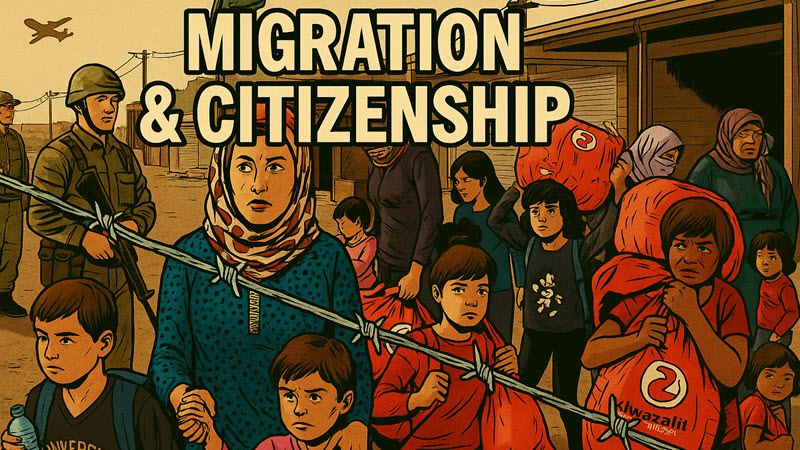
This article explores how Mass Resettlement influenced Ethnic Violence across Rwanda. The author theorizes that regimes deploy resettlement strategically along contested frontiers, creating a defense mechanism built on ethnic demographics.
Specifically, following independence, the Hutu revolutionary regime undertook large-scale Hutu Resettlement (approx 450k) targeting frontier zones and Tutsi areas. This initial policy aimed to counter external threats from Tutsi militias by establishing control.
A key finding reveals that this strategy turned vulnerable when the RPF-led invasion in the 1990s threatened existing power structures, leading directly to Hutu Resettler Violence (RPF threat) against Tutsis. This causal connection forms the basis for understanding subsequent demographic shifts and violence.
The research employs two main methods: a Geographic Regression Discontinuity Design analyzing data on resettlement versus non-resettlement zones, which identified a statistically significant 20–35% increase in violence following settlement; and detailed Process Tracing (RPF Invasion) examining the aftermath of an RPF attack near one resettled commune to confirm the hypothesized reaction.
These findings suggest that political science must reorient its focus toward how peaceful state policies like settlement can become catalysts for devastating ethnic conflict, particularly when facing regime change.
| Mass Resettlement and Political Violence: Evidence from Rwanda was authored by Lachlan McNamee. It was published by Johns Hopkins in World Pol. in 2018. |

